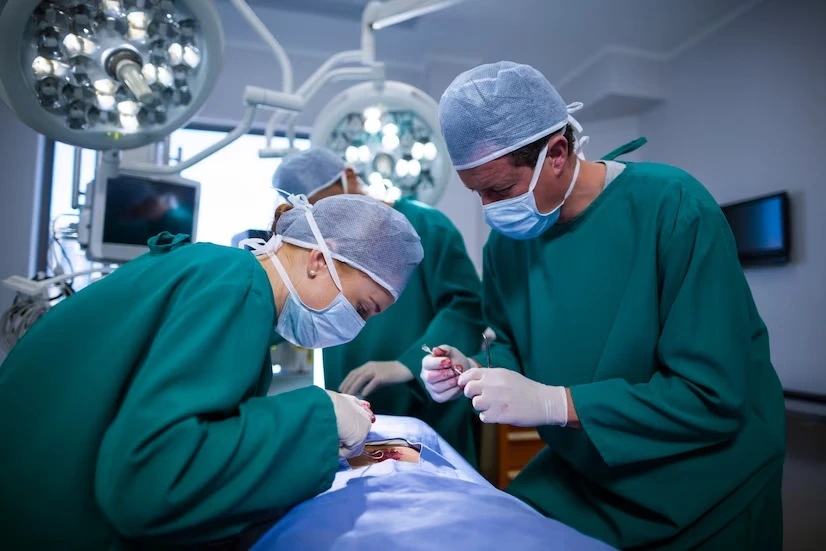
Hernia surgery or herniorrhaphy is a commonly undertaken medical procedure to treat hernias. You do not have to opt for hernia surgery for complicated hernias alone. You can also plan a hernia repair surgery before the hernia gets complicated. Hernia surgery is made easy and updated today with the latest surgical technologies. You just need an experienced hernia surgeon to do a successful herniorrhaphy for you. So, if you are planning to repair your hernia, choose an experienced hernia surgeon and carry on with your hernia surgery fearlessly. How Long Do Hernia Surgeries Take? A hernia surgery takes around 30 minutes to 5 hours on average. The duration of hernia surgeries depends upon the severity of the hernia and the type of herniorrhaphy involved. There are three kinds of hernia surgeries employed: Open surgery Laparoscopic surgery Robotic surgery Laparoscopic and robotic surgeries are minimally invasive and they are employed to treat less malignant forms of hernia. When the hernia is located in a complicated region as in the case of lumbar incisional hernia, open surgeries are suggested. Since open surgeries are employed for complicated hernia situations most of the time laparoscopic and robotic surgeries take less time than open surgeries to complete repairing the hernia. During the hernia repair surgeries, the hernia is pushed to its original position, and a mesh or suturing is used to close the weak spot to prevent future hernia. Open Hernia Surgery Duration Open hernia surgery is adopted for complicated hernia scenarios. It uses an incision of 6 to 8 cm in size to operate on the hernia. General anesthesia is administered during the process as well. Open hernia surgery takes at least an hour to operate and requires hospitalization. Laparoscopic Hernia Surgery Duration Laparoscopic hernia surgery is widely employed to repair hernia nowadays. It is minimally invasive and uses smaller incisions. Laparoscopic hernia surgeries take no longer than an hour or two and require minimal hospitalization. Robotic Hernia Surgery Duration Robotic hernia surgery is a minimally invasive surgery. It employs machines like the da vinci to operate on the patient. Robotic hernia surgery is employed to repair uncomplicated hernias and does not require more than an hour to complete the repair. Factors Influencing Hernia Surgery Duration The severity of the hernia and the type of surgery employed are two factors that influence the duration of hernia surgery. Minor herniorrhaphy does not require hospitalization most of the time. You will have to stay in the hospital until the anesthesia administered wears off which does not take more than two hours. In cases of major surgery, if the effects of anesthesia persist longer, extended hospitalization may be necessary. How to Prepare for a Hernia Surgery? First, the location and severity of your hernia will be diagnosed through recommended tests like barium swallow, abdominal ultrasound, or CT scans. You will have to take blood and other tests as directed by your hernia surgeon before the surgery to make sure that your body is ready for the surgery. Avoid smoking and alcohol consumption before the surgery as it can make your hernia surgery impossible. Incorporate a surgery-friendly diet too. Also, inform your surgeon of your medical history and any medications you are taking. If you are pregnant, get the guidance of your OB/GYN as well before hernia surgery. Conclusion Hernia repair has been made easy and quicker with modern hernia surgical technologies. The duration of the hernia surgery is also shortened due to these upgraded procedures. Most hernia surgeries do not require overnight stays and you can resume your routine work very soon after your hernia surgery. Take up a hernia surgery as soon as possible and prevent future complications of your hernia. To know more about hernia surgeries consult a hernia specialist. Contact Form NameEmailPhone NoYour MessageBook Consultation Dr. K. Amilthan MBBS., MS., FMAS., FALS. Heal Your Hernia Now: 15+ Years of Experience 3,000+ Surgeries Your Journey to Wellness Begins with us. Book Appointment Edit Template FAQ’s 1) Can you walk after hernia surgery? You can walk after a hernia surgery unless otherwise directed by your physician. If your surgery is a minor one, you can resume your routine work very soon after the hernia surgery. Just avoid lifting heavy objects, jogging, and other strenuous activities. 2) Is hernia surgery painful? Hernia surgery is less painful nowadays due to modern surgical procedures. Also, you will be administered anesthesia during surgery. So, the amount of pain you encounter during and after the hernia surgery is less. Minimally invasive surgeries guarantee less surgical pain as well. 3) What you should not do after hernia surgery? Do not be involved in strenuous activities after hernia surgery. Avoid alcohol, and driving until recovery. Avoid eating processed and unhealthy foods, just maintain health foods after hernia surgery. 4)Is laparoscopic hernia surgery faster than open surgery? Operating time varies depending on the type and complexity of the hernia and the patient’s individual circumstances. The surgeon determines the appropriate approach after evaluation. 5)How long will I need to recover? Recovery varies from person to person and depends on the procedure, overall health and type of work or physical activity involved. Dr. Amilthan Dr. Amilthan is a renowned laparoscopic hernia surgeon based in Chennai, with over 15+ years of experience in general surgery. He completed his MBBS and MS in General Surgery at Kilpauk Medical College and Government Royapettah Hospital in Chennai. Edit Template All Posts Hernia Blog Herniotomy Surgery A hernia is a bulge or swelling that happens when an organ or tissue pushes through a weak muscle and… Read More Bochdalek Hernia Bochdalek hernia or posterolateral diaphragmatic hernia is prominently a congenital defect, although it can also develop in adults. Bochdalek hernia… Read More Incisional Hernia After Laparoscopic Surgery Incisional hernia after laparoscopic surgery is a condition that can develop when a surgical incision in the abdominal wall does not… Read More Load More End of Content.
Internal Hernia Types
Internal hernias are hernia versions that occur in rare. The protrusion of the abdomen content causes them, often bowel or intestine loops that pass through the abdominal tissue wall. Internal hernias are not visible on the outside and are caused due to birth defects, trauma, or intra-abdominal pressure. They are often found via examining medical history, physical examination, and imaging tests. Internal hernias do not require any surgical intervention in case of minor disturbance. In severe scenarios, minimally invasive surgeries and open surgery options are available. What are the Main types of Internal Hernias? The main kinds of internal hernias include: Paraduodenal Hernia Foramen of Winslow Hernia Transmesenteric Hernia Transomental Hernia Intersigmoid Hernia Pericecal Hernia Retroanastomotic Hernia Paraduodenal Hernia Paraduodenal hernias are the most common internal hernias. It is caused by the small intestine protruding into the paraduodenal fossa. The paraduodenal fossa is the abdominal space at the back of the duodenum (a section of the small intestine). Herniation into the paraduodenal fossa is often caused by a defective or weak spot in the mesentery (the tissue that supports the intestines by attaching it to the back wall of the abdomen). Paraduodenal hernias are usually congenital due to the failure of the intestines to rotate completely during fetal development. There are two kinds of paraduodenal hernia: the left paraduodenal hernia and the right paraduodenal hernia. Most often the hernia appears in the left paraduodenal fossa (fossa of Landzert) than in the right paraduodenal fossa (fossa of Waldeyer). Paraduodenal hernias are identified through nausea, vomiting, constipation, and intestinal obstruction. Imaging tests are employed at times as paraduodenal hernias are difficult to diagnose. Open or laparoscopic surgery can be used to treat paraduodenal hernias. The choice of surgery depends upon the severity of the paraduodenal hernia. Foramen of Winslow Hernia The foramen of Winslow is the opening or passage between the greater peritoneal cavity and the lesser sac (the space between the stomach and the pancreas). When the abdominal contents herniate to the foramen of Winslow, it is called the foramen of Winslow hernia or the lesser sac hernia. An enlarged foramen of Winslow or abnormal development of the intestines during fetal development can cause the foramen of Winslow hernia. The foramen of Winslow hernia is rare but poses the risk of obstructing the bowel. Obstruction of the foramen of Winslow hernia causes pain, nausea, vomiting, or constipation. The foramen of Winslow hernia is diagnosed through imaging tests and treated via laparoscopy or open surgery. Transmesenteric Hernia Mesentery is a membrane that helps the intestines to attach to the abdominal wall. In transmesenteric hernia, the small intestine herniates through a weak spot in the mesentery. Transmesenteric hernia can be congenital or developed later in life due to abdominal injury, inflammation of the mesentery, or a previous surgical accident. The transmesenteric hernia causes pain around the upper part of the central abdominal region and the umbilical region. When the transmesenteric hernia gets complicated, nausea, vomiting, and intestinal obstruction problems also arise. Open or minimally invasive surgeries are employed to treat transmesenteric hernia based on its severity. Transomental Hernia Transomental hernia occurs when the small intestine herniates through the omentum. The omentum is a fatty tissue that fills the abdominal cavity and lies over the organs of the abdomen. This hernia often strangulates the small intestine and requires immediate surgical intervention. Transomental hernia occurs due to birth defects, abdominal inflammation, trauma, or surgical exploration. Constipation may accompany nausea and vomiting in case the hernia gets complicated, and open or laparoscopic surgery may be employed to repair it. Intersigmoid Hernias Intersigmoid hernias occur when the small intestine or other abdominal content herniates through the intersigmoid fossa. The inter-sigmoid fossa is the peritoneal cavity between the sigmoid colon and the mesentery. Intersigmoid hernias are rare and can be identified through pain in the abdominal and flank regions. Complicated intersigmoid hernias cause vomiting, nausea, constipation, and abdominal pain. Laparoscopic surgery is widely employed to treat inter-sigmoid hernia. Open surgery is also employed when necessary. Pericecal Hernias Pericecal hernias are also known as paracecal hernias, ileocolic hernias, retrocecal hernias, or ileocecal hernias. Pericecal hernias arise due to defects in the cecal mesentery and herniation of the abdominal content to the pericecal fossa. It is a rare internal hernia. Pericecal hernia is often misunderstood as appendicitis. It is characterized by severe pain in the lower abdomen and obstructs the small intestine. It can be diagnosed through barium swallow or imaging tests, and open or laparoscopic surgery is employed to repair it. Retroanastomotic Hernias Retroanastomotic hernias are rare but highly fatal. They occur due to the defective retro anastomotic space post a retro colic anastomosis or surgery. Retrocolic anastomosis leaves a space in the mesentery that gives space for the bowels to herniate and give rise to retroanastomotic hernias. Retroanastomotic hernias are characterized by severe pain in the abdomen, constipation, nausea, and vomiting and demand immediate medical attention. Conclusion Internal hernias are rare hernias and are challenging to the diagnosing surgeon. Often internal hernias get noticed only when the complicated situation escalates. Imaging tests and other physical examinations are employed to identify internal hernias, and they require the skilled eye of an experienced hernia surgeon to diagnose and operate on them. To know more about internal hernias and how to treat them, contact a hernia specialist. Contact Form NameEmailPhone NoYour MessageBook Consultation Dr. K. Amilthan MBBS., MS., FMAS., FALS. Heal Your Hernia Now: 15+ Years of Experience 3,000+ Surgeries Your Journey to Wellness Begins with us. Book Appointment Edit Template FAQ’s 1) Is internal hernia curable? Yes, internal hernias are curable. Some internal hernias are manageable without surgery, while others are repaired through surgery to prevent complications. You can take enough fluids and bowel rest to prevent an internal hernia from getting severe. 2) How long is recovery from an internal hernia repair? The recovery from an internal hernia surgery is based on the surgery employed. Minimally invasive surgeries enable you to resume work within 1 or 2 days.
Internal Abdominal Hernia Symptoms
Internal abdominal hernias are rare hernias. Yet when they occur, they are untraceable until complication. A complicated hernia can leave an array of symptoms. Based on the symptoms and further diagnosis, appropriate hernia treatment is recommended. In this article, we’ll see the possible symptoms of an internal abdominal hernia and the treatments available to treat it. Symptoms of Internal Abdominal Hernia The symptoms of an internal abdominal hernia include: Abdominal Pain Nausea Vomiting Bloating Abdominal Distension Changes in Bowel Movements Abdominal Pain Abdominal pain is a primary symptom of an internal hernia getting complicated. The position of an internal abdominal hernia determines the area of occurrence of pain in the abdominal region. A foramen of Winslow hernia causes pain in the upper right abdominal area, whereas a transmesenteric hernia causes pain in the upper or central abdomen. The degree of severity of the abdominal pain also depends upon the kind of internal abdominal hernia. A transomental hernia causes an intermittent and dull pain, and the abdominal pain caused by an intersigmoid hernia feels like a cramp. Nausea Nausea occurs when the internal abdominal hernia gets complicated. Internal hernia complication includes obstruction, strangulation, or incarceration of the intestine or other bowel parts. When the intestine or other bowel parts get complicated you may feel sick to the stomach and feel like throwing up whatever you eat or drink. Also, complicated internal abdominal hernias can cause a feeling of satiety or fullness of the stomach, preventing taking in adequate nutrition. Vomiting Vomiting naturally follows nausea most of the time. A complicated internal abdominal hernia can hinder the digestion process. Due to indigestion, vomiting may also ensue. If vomiting arises because of indigestion, it is only best to repair the hernia as soon as possible to stop the worsening of the situation and one’s health. Bloating Bloating refers to the accumulation of gas in the stomach and intestines. Improper digestion of food and obstructed functions of the bowels can lead to the build-up of gas. You may feel your abdomen to be often tight and highly discomforting due to bloating. Bloating hinders healthy bodily function. So, it is better to address the internal hernia that is responsible for bloating as soon as possible. Abdominal Distension Bloating and swelling of the abdomen due to internal hernias cause abdominal distension. Abdominal distension refers to the abnormal swelling of the abdomen outwardly. Bloating is the main reason for the occurrence of abdominal distension. Swelling of the abdominal content may also cause it at times. Changes in Bowel Movements Internal abdominal hernias disrupt bowel movements in many ways. Constipation and diarrhea are two chief disruptions brought about by internal abdominal hernias affecting bowel movements. With improper bowel movements serious health ailments may arise. So, diagnose and repair an internal abdominal hernia sooner. Symptoms of Intestinal Obstruction When the intestine gets stuck in the hernia sac, it is called an obstructed hernia. An obstructed intestine is dangerous to health and should be repaired quickly. Internal abdominal hernias cause intestinal obstruction more often. Some of the symptoms of intestinal obstruction include: Severe pain in the area of obstruction Cramping of the abdomen Nausea Vomiting Satiety Swelling of the abdomen Constipation Bloating If you encounter any of these symptoms, it is an indication to visit a hernia specialist immediately and repair the hernia. Signs of Hernia Strangulation When the blood supply to the contents in the hernia sac gets cut off it is called strangulation of the hernia. A strangulated hernia is fatal as it can turn into a gangrene rapidly. Signs of a hernia getting strangulated include: Acute pain in the hernia region Reddening or darkening of the abdomen site of the hernia Fever Nausea Vomiting Constipation Bloating Internal abdominal hernias get strangulated easily. Therefore, repairing an internal abdominal hernia is a priority. Is Internal Hernia Curable? Yes, healing an internal hernia is possible. Modern surgical procedures like laparoscopy and robotic assistance are widely employed to repair an internal abdominal hernia. Internal abdominal hernias occur rarely and their diagnosis is also difficult. Barium swallow, CT (computed tomography) scan, and other imaging tests are usually employed to diagnose an internal abdominal hernia. You can manage an internal abdominal hernia without surgery if it does not cause any pain. But to prevent adverse scenarios it is better to employ an elective hernia repair. Treatment for Internal Hernia The best treatment for internal abdominal hernias is surgery. The latest surgical methods make hernia surgery a piece of cake. You can leave the hospital on the same day of your surgery and also experience little to no post-surgery complications. The recovery period is also shorter for minimally invasive surgical procedures. Open surgery is employed only when the hernia repair requires a larger incision. Other than that, laparoscopy and robotic surgeries are used to repair internal hernias often. Conclusion Internal abdominal hernias are complications that can be treated effectively if the symptoms are properly analyzed and used for diagnosis. Mark the symptoms that you experience in your abdominal region and report them to a hernia repair specialist to have an accurate treatment of the ailment. Also, ensure that the hernia surgeon you visit has sound knowledge and surgical experience with internal abdominal hernias. To know more about internal abdominal contents and its symptoms contact a hernia specialist. Contact Form NameEmailPhone NoYour MessageBook Consultation Dr. K. Amilthan MBBS., MS., FMAS., FALS. Heal Your Hernia Now: 15+ Years of Experience 3,000+ Surgeries Your Journey to Wellness Begins with us. Book Appointment Edit Template FAQ’s 1) How do I know if I have a hernia in my abdomen? If you experience nausea, vomiting, constipation, bloating, or fever accompanied by sharp pain in your abdomen, you may have to visit a hernia specialist. An internal hernia is not visible on the outside but exhibits the same symptoms as an outward hernia. 2) What does an internal abdominal hernia feel like? You will feel a sharp pain in the abdominal region where you are herniated. You will not
Internal Hernia
Hernias are discomforting displacements of the body parts from their original position. Usually, hernias protrude outwardly and are visible on the abdominal surface. These are called external hernias. At times, the internal body parts, especially the abdominal contents like the colon or small intestine, protrude through the openings or weak spots in the peritoneum or mesentery. This results in the occurrence of internal hernias. Internal hernias are not visible on the outside and get identified only when it gets complicated most of the time. What is an Internal Hernia? An internal hernia is the protrusion of the abdominal viscera, especially the large and small intestines, into the weak spots of the peritoneum or mesentery. The peritoneum and mesentery of the abdominal cavity are membranes that line the abdominal cavity and cover the abdominal organs. When the peritoneum or mesentery has openings or weak spots, there arises a possibility for the small or large intestine segments to enter into them. Internal hernias remain inside the abdominal cavity and are not visible on the abdominal surface. Also, internal hernias are rare, accounting for less than 1% of hernia incidence. Types of Internal Henria Internal hernias are of different types based on the location of the hernia, namely: Paraduodenal hernia Foramen of Winslow hernia Transmesenteric hernia Transomental hernia Intersigmoid Hernia Pericecal Hernia Retroanastomotic Hernia and Supravesical hernia All these hernias occur due to defects in the abdominal cavity’s peritoneum, omentum, or mesentery. Causes of Internal Hernia The chief cause for internal hernias is weak abdominal tissues that are congenital. When the abdominal tissues do not develop, or the intestines do not rotate properly during fetal development, it can lead to internal hernia later in life. Other causes of internal hernia include: Abdominal trauma Inflammation of the abdominal tissues or intestines Abdominal surgeries Pregnancy Chromic coughs Straining while defecating Abdominal fluid buildup Heavy lifting, etc. Symptoms of Internal Hernia Internal hernias are rare, mild, and asymptomatic most of the time. A complicated hernia, however, gives rise to many symptoms like: Abdominal discomfort or pain Vomiting Nausea Constipation Abdominal tenderness Complications of Internal Hernia Internal hernias can get obstructed, strangulated, or incarcerated with time if left untreated. A complicated hernia is dangerous and can turn fatal with the blood supply getting cut off. Since internal hernias include complications of the abdominal organs, it can lead to indigestion, constipation, vomiting, and weakness of the body. Treatment for Internal Hernia Mild and asymptomatic internal hernias are manageable without surgery. You have to take lots of liquids and give enough rest to your bowels by limiting food intake to manage a mild internal hernia. Discomforting and complicated internal hernias require immediate surgical intervention. Also after surgery you have maitain your food habits. Internal hernias are difficult to diagnose. So, imaging tests like computed tomography (CT scan), X-ray, etc. are widely used. Surgical options include laparoscopy and open surgery. The choice of surgery depends upon the nature, severity, and urgency of the hernia to be repaired. How to Prevent Internal Hernia? Congenital internal hernias cannot be helped. But, to prevent internal hernias in later life, you can: Take a protein-rich diet Do cardiovascular exercises Avoid smoking and alcoholism Maintain a proper BMI (Body Mass Index) Avoid straining while defecating Take medication for chronic cough Avoid lifting heavy weights Conclusion Internal hernias are uncommon but demand our undiluted attention as they can get complicated within a short period. Internal hernias are also difficult to diagnose. So, consult an experienced and qualified hernia surgeon to diagnose your internal hernia symptoms. Advanced surgical procedures are available to treat internal hernias nowadays. So, contact a hernia surgeon as soon as possible to prevent hernia complications. To know more about internal hernias, contact a hernia specialist. Contact Form NameEmailPhone NoYour MessageBook Consultation Dr. K. Amilthan MBBS., MS., FMAS., FALS. Heal Your Hernia Now: 15+ Years of Experience 3,000+ Surgeries Your Journey to Wellness Begins with us. Book Appointment Edit Template FAQ’s 1) Do internal hernias need surgery? Internal hernias cannot be completely cured without surgery. So, internal hernias do require surgery. Surgeries also prevent the internal hernia from getting complicated. 2) How do you fix an internal hernia? Internal hernias are fixed through laparoscopic or open surgeries. The surgeon places the herniated organ in its original place and sutures or uses mesh to seal the weak spot. 3) Can you live with an internal hernia? You can live with an internal hernia as long as the hernia does not get complicated. Take more liquids and give enough rest to your bowels to manage an internal hernia. Dr. Amilthan Dr. Amilthan is a renowned laparoscopic hernia surgeon based in Chennai, with over 15+ years of experience in general surgery. He completed his MBBS and MS in General Surgery at Kilpauk Medical College and Government Royapettah Hospital in Chennai. Edit Template All Posts Hernia Blog Herniotomy Surgery A hernia is a bulge or swelling that happens when an organ or tissue pushes through a weak muscle and… Read More Bochdalek Hernia Bochdalek hernia or posterolateral diaphragmatic hernia is prominently a congenital defect, although it can also develop in adults. Bochdalek hernia… Read More Incisional Hernia After Laparoscopic Surgery Incisional hernia after laparoscopic surgery is a condition that can develop when a surgical incision in the abdominal wall does not… Read More Load More End of Content.
Richter Hernia
Richter hernia is named after the German surgeon August Gottlieb Richter who first described it in 1778. Richter hernia refers to the protrusion of the circumference of the antimesenteric part of the small bowel through a defect in the abdominal wall. The defect on the abdominal wall leading to the Richter hernia is often rigid and small causing the hernia to strangulate easily. Owing to its high strangulation rate Richter hernias must be repaired immediately upon diagnosis. What is a Richter Hernia? A Richter hernia is a protrusion of the antimesenteric border of the small intestine through the femoral or inguinal ring or incisional defects on the abdominal wall. Richter hernias protrude most often through the femoral ring and are common in men and women over 70 years of age. Richter hernias are prescribed with surgical repair as they cannot be managed without surgery. Symptoms of Richter Hernia Richter hernias do not exhibit enough clinical symptoms until strangulation. So it is often difficult to diagnose a Richter hernia. A complicated Richter hernia however exhibits symptoms such as: Pain in the lower abdomen Nausea Vomiting Diarrhea Constipation Causes of Richter Hernia The causes of a Richter hernia include Weakening of the abdominal wall due to old age Unhealthy lifestyle practices Doing strenuous physical activities Multiple pregnancies Obesity Incisional trauma, etc. Sites of Richter Hernia Richter hernias can occur in the following sites: Femoral rings Inguinal rings Weak sites on the abdominal wall Surgical incision sites on the abdomen Richter Hernia Complications Strangulation, obstruction, and incarceration of the hernia are the complications of a Richter hernia. The risky part about a Richter hernia is its easy strangulation. The primary reason for a Richter hernia to get strangulated easily is the small defective region of the abominable wall through which only the antimesenteric border of the small intestine passes. Since not more than one-third of the intestine passes through the opening obstruction of the hernia does not take place but the narrow and rigid weak spots or openings strangulate the intestine easily. A strangulated Richter hernia often leads to gangrene and other fatal complications. If a Richter hernia begins to cause severe ailments, it indicates that the hernia has become complicated and requires immediate medical attention. Treatment for Richter Hernia The ultimate treatment for Richter hernia is surgical intervention. Based on physical examinations and imaging tests like ultrasound or computed tomography (CT), the Richter hernia is first diagnosed. The choice of surgical approach is based on factors such as the location of the hernia, the health state of the patient, the severity of the hernia, and the preference of the surgeon. A complicated hernia is mostly repaired via open surgery, laparoscopic and robotic surgeries are employed as well. Preventing Richter Hernia Richter hernias may occur due to the inevitable weakening of the abdominal wall with increasing age. However, you can try to minimize the risk of the occurrence of a Richter hernia by: Taking a fiber-rich diet Getting enough rest after an abdominal surgery Not undertaking strenuous physical activities Avoiding smoking, excess alcohol consumption, and drugs Maintaining a healthy BMI Doing moderate exercises, etc. Conclusion A Richter hernia must be treated with the utmost priority as it can escalate into a strangulated hernia easily. If you have had any abdominal surgeries earlier, be on the lookout for Richter hernias as incisional traumas lead to Richter hernias more often. Richter hernias can be treated via modern and advanced surgical procedures. So, reach out to a hernia specialist immediately to prevent any adverse circumstances and for quicker recovery from the hernia. To know more about Richter hernias and how to deal with them, contact a hernia specialist. Contact Form NameEmailPhone NoYour MessageBook Consultation Dr. K. Amilthan MBBS., MS., FMAS., FALS. Heal Your Hernia Now: 15+ Years of Experience 3,000+ Surgeries Your Journey to Wellness Begins with us. Book Appointment Edit Template FAQ’s 1) Do Richter hernias need surgery? Yes, a Richter hernia requires surgical intervention to prevent complications. Since a Richter hernia can get strangulated quickly it is best to repair a Richter hernia electively. 2) How do you fix a Richter hernia? Richter hernias are fixed through laparotomy or laparoscopic surgeries. Richter hernias are prone to faster strangulation so surgical fixation of the hernia is recommended most often. 3) Can you live with a Richter hernia? You can live with a Richter hernia until it gets complicated. A complicated Richter hernia must face surgical repair to avoid fatal consequences. Due to its high strangulation rates, Richter hernias cannot be managed without surgery. Dr. Amilthan Dr. Amilthan is a renowned laparoscopic hernia surgeon based in Chennai, with over 15+ years of experience in general surgery. He completed his MBBS and MS in General Surgery at Kilpauk Medical College and Government Royapettah Hospital in Chennai. Edit Template All Posts Hernia Blog MAYDL’S HERNIA A hernia occurs when an organ or any other part of your body pushes through the muscle and surrounding tissue… Read More Gilbert Classification of Hernia An inguinal hernia occurs when the organs push through and bulge against the weak muscles of the abdomen. An effective… Read More Difference Between Hernia And Appendix Whether you have a hernia or appendicitis, the main symptom you will experience is stomach pain. So, it might be… Read More Load More End of Content.
Paraduodenal Hernia
Paraduodenal hernia is a common internal hernia that arises due to the protrusion of the small bowels through the openings in the peritoneum in the posterior abdominal wall. It is difficult to diagnose a paraduodenal hernia and is often diagnosed after the obstruction of the small bowel. The failed fusion of the left or transverse colon to the posterior abdominal wall during fetal development is the main cause of paraduodenal hernia. What is a Paraduodenal Hernia? A paraduodenal hernia is an internal hernia that occurs as a result of an abnormal protrusion of the mesocolon into the fossa of Landzert or the fossa of Waldyer. Paraduodenal hernias involve parts of the small intestine such as the duodenum, ileum, or jejunum herniating through weak spots or openings in the peritoneum present behind or near the duodenum. Paraduodenal hernias cause rapid obstruction of the small intestine and must be treated immediately. Types of Paraduodenal Henrias Paraduodenal hernias are of two kinds: Left paraduodenal hernia Right paraduodenal hernia Left paraduodenal hernias occur due to the protrusion of the left mesocolon into the fossa of Landzert and the right paraduodenal hernia occurs due to the protrusion of the mesocolon into the fossa of Waldyer. Both left and right paraduodenal hernias are predominantly congenital with the left paraduodenal hernia having a higher rate of occurrence than the right paraduodenal hernia. Paraduodenal Hernia Symptoms Paraduodenal hernias can be symptomatic and asymptomatic. Some may encounter intermittent symptoms if the hernia is reducible. Symptoms that paraduodenal hernias exhibit include Chronic or acute abdominal pain Nausea Vomiting Constipation Diarrhea Distension or bloating Causes of Paraduodenal Hernia Paraduodenal hernias are congenital in most cases. When the midgut or the intestines do not completely rotate during fetal development paraduodenal hernias may occur in later life. Malrotation of the midgut also may result in a paraduodenal hernia. Another chief cause of paraduodenal hernias is the incomplete fixture or fusion of the mesocolon to the peritoneum at the back of the abdominal wall. Paraduodenal hernias occur mostly in men and women over 40 years of age. Paraduodenal Hernia Complications The complications of a paraduodenal hernia include obstruction, strangulation, and bowel ischemia. These complications can be prevented if the paraduodenal hernia is diagnosed before the worsening of the hernia. Paraduodenal hernias have a considerable mortality rate due to their delayed diagnosis and treatment. Reach out for medical help from expert radiologists to diagnose any hernia-related symptoms you experience and electively plan your hernia treatment to prevent any adverse consequences. Paraduodenal Hernia Treatment Paraduodenal hernias require surgery for a complete cure. You can choose to electively repair the paraduodenal hernia before it gets complicated. Computed tomography (CT) scans are usually employed to diagnose internal hernias alongside assessment of physical symptoms. Exploratory laparotomy and laparoscopy are also employed to diagnose a paraduodenal hernia. Based on the condition of the paraduodenal hernia, surgical challenges, patient health status, and surgeon’s preference, laparoscopy or laparotomy is opted to repair the hernia. How to Prevent Paraduodenal Hernia? Paraduodenal hernias are mostly congenital. However, you can adopt the following practices to prevent paraduodenal hernias in later life: Incorporate a fiber-rich diet Maintain a healthy BMI (Body Mass Index) Avoid smoking, steroids, and excessive alcohol Take medications for chronic coughing and constipation Avoid lifting heavy weights or straining yourself Do moderate exercises to strengthen your core Conclusion Paraduodenal hernias are the most common internal hernias. They can be treated electively with proper diagnosis and advanced hernia repair procedures. The symptoms of a paraduodenal hernia may be non-specific at times and hard to diagnose. Yet, it is important to be cautious of hernia-related symptoms and get treatment as quickly as possible. To know more about paraduodenal hernias and how to treat them for safer and quicker recovery consult a hernia specialist. Contact Form NameEmailPhone NoYour MessageBook Consultation Dr. K. Amilthan MBBS., MS., FMAS., FALS. Heal Your Hernia Now: 15+ Years of Experience 3,000+ Surgeries Your Journey to Wellness Begins with us. Book Appointment Edit Template FAQ’s Do paraduodenal hernias need surgery? Paraduodenal hernias require surgery for complete recovery. Internal hernias as paraduodenal hernias escalate into severity very quickly. So, it is essential to repair a paraduodenal hernia via surgery even when it is manageable. How do you fix a paraduodenal hernia? Laparoscopy or laparotomy surgery is usually employed to fix a paraduodenal hernia. You can manage a paraduodenal hernia without surgery as long as it does not get severe. But it is advisable to fix a paraduodenal hernia electively if diagnosed. Can you live with a Paraduodenal hernia? You can live with a paraduodenal hernia as long as it does not get complicated and cause strangulation or obstruction. A reducible paraduodenal hernia is manageable without surgery but an irreducible paraduodenal hernia demands immediate medical attention. Dr. Amilthan Dr. Amilthan is a renowned laparoscopic hernia surgeon based in Chennai, with over 15+ years of experience in general surgery. He completed his MBBS and MS in General Surgery at Kilpauk Medical College and Government Royapettah Hospital in Chennai. Edit Template All Posts Hernia Blog MAYDL’S HERNIA A hernia occurs when an organ or any other part of your body pushes through the muscle and surrounding tissue… Read More Gilbert Classification of Hernia An inguinal hernia occurs when the organs push through and bulge against the weak muscles of the abdomen. An effective… Read More Difference Between Hernia And Appendix Whether you have a hernia or appendicitis, the main symptom you will experience is stomach pain. So, it might be… Read More Load More End of Content.
Left Paraduodenal Hernia
Left paraduodenal hernia is the most common paraduodenal hernia to occur. It is an internal hernia wherein the small intestine herniates through the weak spot in the peritoneum behind the mesocolon. Left paraduodenal hernias like any internal hernias are hard to diagnose but they can be effectually treated through modern surgical techniques. Read below to learn about the symptoms, causes, complications, and ways to prevent a left paraduodenal hernia to diagnose it early and electively repair it without encountering any complications. What is a Left Paraduodenal Hernia? A left paraduodenal hernia is an abnormal protrusion of the small intestine through a weak spot in the peritoneum at the back of the mesocolon. It often occurs due to the herniation of the small intestine through a congenital defect, called the fossa of Landzert. A left paraduodenal hernia is also common in men and women over 40 years of age. It is difficult to diagnose a left paraduodenal hernia just via physical examinations. So, imagining tests such as ultrasound or computed tomography (CT) scans are required most of the time to examine a left paraduodenal hernia. Symptoms of Left Paraduodenal Hernia Left paraduodenal hernias may or may not be symptomatic. When the severity of the hernia heightens, abdominal pain and discomfort may accompany it. The abdominal pain may be non-specific and intermittent. The symptoms of a left paraduodenal hernia are indiscernible most of the time and require exploratory laparotomy or imaging tests for confirmation. The symptoms of a left paraduodenal hernia include Acute or chronic abdominal pain Nausea Vomiting Constipation Diarrhea Abdominal distension Bloating, etc. Causes of Left Paraduodenal Hernia Left paraduodenal hernias usually develop in a congenital defect called the fossa of Landzert, which is formed by the incomplete rotation of the midgut or intestines during fetal development. The failed fixture of the mesocolon to the posterior abdominal wall can result in a left paraduodenal hernia as well. Factors such as age, lifestyle, and ailments may also contribute to the incidence of a left paraduodenal hernia. Complications of Left Paraduodenal Hernia The complications of a left paraduodenal hernia include strangulation, incarceration, and obstruction. When the left paraduodenal hernias are reducible, complications do not arise. But when the hernia becomes irreducible the chances of obstruction and strangulation increase. A complicated left paraduodenal hernia can turn fatal and therefore needs quick medical attention. Treatment for Left Paraduodenal Hernia Since the left paraduodenal hernia is an internal hernia, it is not visible on the outside. The symptoms of a left paraduodenal hernia are also not clinically adequate. So, a laparoscopy or laparotomy exploration is recommended to diagnose a left paraduodenal hernia. Imaging tests such as ultrasound and CT scans are also employed to diagnose a left paraduodenal hernia alongside physical examination. A left paraduodenal hernia is often identified by the cluster of small intestine loops in the space near the kidney on the left anterior portion of the abdomen. A left paraduodenal hernia demands surgical intervention as it is prone to easy strangulation. Laparoscopy or laparotomy surgical options are available to repair a left paraduodenal hernia. The choice of surgery however depends upon the position and severity of the left paraduodenal hernia, the health condition of the patient, and the preference of the surgeon. How to Prevent Left Paraduodenal Hernia? Left paraduodenal hernias occurring due to congenital defects are harder to prevent. But you can incorporate certain healthy practices to keep the left paraduodenal hernia at bay as long as possible. Some helpful tips to prevent a left paraduodenal hernia include Maintaining a healthy BMI (Body Mass Index) Eating a fibre-rich diet Leading a healthy lifestyle Not lifting heavy objects Avoiding smoking and steroids Conclusion Left paraduodenal hernias can be effectively repaired if diagnosed early. So, consult a hernia specialist as soon as possible when you experience any left paraduodenal hernia-related symptoms. Since it is difficult to diagnose a left paraduodenal hernia always consult an experienced and expert hernia specialist for a successful treatment of the hernia. To know more about left paraduodenal hernias contact a hernia specialist. Contact Form NameEmailPhone NoYour MessageBook Consultation Dr. K. Amilthan MBBS., MS., FMAS., FALS. Heal Your Hernia Now: 15+ Years of Experience 3,000+ Surgeries Your Journey to Wellness Begins with us. Book Appointment Edit Template FAQ’s What is the surgery for a left paraduodenal hernia? Left paraduodenal hernias are usually repaired using laparotomy surgery or open surgery. The herniated bowel is reduced to its original position, the strangulated bowel area is resected, if there is any, and the hernia orifice is sealed to prevent future herniation through the left paraduodenal hernia surgery. How common is paraduodenal hernia? Paraduodenal hernias are rare as they are internal hernias. But they account for a majority of internal hernias. Can you live with a paraduodenal hernia? You can live with a paraduodenal hernia as long as it does not get strangulated or obstructed. Since internal hernias get complicated easily it is better to repair a paraduodenal hernia to live ailment-free. Dr. Amilthan Dr. Amilthan is a renowned laparoscopic hernia surgeon based in Chennai, with over 15+ years of experience in general surgery. He completed his MBBS and MS in General Surgery at Kilpauk Medical College and Government Royapettah Hospital in Chennai. Edit Template All Posts Hernia Blog MAYDL’S HERNIA A hernia occurs when an organ or any other part of your body pushes through the muscle and surrounding tissue… Read More Gilbert Classification of Hernia An inguinal hernia occurs when the organs push through and bulge against the weak muscles of the abdomen. An effective… Read More Difference Between Hernia And Appendix Whether you have a hernia or appendicitis, the main symptom you will experience is stomach pain. So, it might be… Read More Load More End of Content.
Bochdalek Hernia Vs Morgagni
Bochdalek and Morgagni hernias are congenital diaphragmatic hernias. They are common in infants and rarer and asymptomatic in adults. Bochdalek and Morgagni hernias require accurate diagnosis and proper treatment as they can turn fatal. The contents of the abdomen herniate into the thoracic cavity in both cases. Knowing the difference between Bochdalek and Morgagni hernias can help you identify them effectually and prevent them from advancing into fatal complaints. Difference Between Bochdalek and Morgagni hernias The main difference between these diaphragmatic hernias is that the Bochdalek hernia appears on the posterior region of the diaphragm, and the Morgagni hernia appears on the front or anterior diaphragmatic region. Bochdalek Hernia Morgagni Hernia Congenital disorder Congenital disorder Exhibits symptoms in infants It is asymptomatic in infants. It can occur in adults Can be present in adults Mostly appears on the side toward the back of the left diaphragm region through the foramen of Bochdalek. Mostly appears on the front of the right diaphragm region through the foramen of Morgagni. More common diaphragmatic hernia. A less common diaphragmatic hernia. Diagnosed during the early stage of life, almost after birth. Diagnosed mostly during adulthood. Symptoms of Bochdalek and Morgagni Hernias The symptoms of Bochdalek and Morgagni hernias include: Shortness of breath Pain in the chest Pain in the abdomen Indigestion Intestinal obstruction Difficulty in eating Bloating Constipation Bochdalek hernias are mostly symptomatic whereas Morgagni hernias can be asymptomatic in infants. This makes asymptomatic diaphragmatic hernias difficult to diagnose most of the time and makes them get carried through to adulthood. Causes of Bochdalek and Morgagni Hernias The causes for Bochdalek and Morgagni hernias are the same. Only the area of occurrence of the hernias differs. If the hernia occurs on the side toward the back of the diaphragm, it is a Bochdalek hernia. If it occurs on the front portion of the diaphragm, it is a Morgagni hernia. The causes of Bochdalek and Morgagni hernias include: Genetic syndromes Anatomical abnormalities Pregnancy Trauma due to accidents Chronic cough Chronic constipation Obesity, etc. Preventing Bochdalek and Morgagni Hernias Congenital diaphragmatic hernias like Bochdalek and Morgagni hernias may be unpreventable. Yet, proper prenatal care is encouraged in the hope of a healthy baby. Adults can practice a healthy lifestyle by maintaining a good BMI (Body Mass Index), exercising regularly, eating a healthy diet, and quitting smoking and steroids to avoid diaphragmatic hernias. As blunt injuries and trauma from accidents can also cause Bochdalek and Morgangni hernias, appropriate treatment to address any post-traumatic issues is recommended. Also, avoid using any sharp onbjects that can injure the diaphragm and lead to herniation of abdominal content. Treatment for Bochdalek and Morgagni Hernias The treatment for both Bochdalek and Morgagni includes laparoscopic surgery. Both hernias can harm the functions of the abdominal and thoracic organs severely, so laparoscopic surgery to repair the hernias as quickly as possible is often suggested. First, imaging tests such as Computed Tomography (CT) scan, X-ray, or ultrasound scans are employed to diagnose the nature and severity of the hernia as Bochdalek and Morgagni hernias are hard to diagnose through simple physical examinations. Laparoscopic surgery is widely prescribed to repair Bochdalek and Morgagni hernias. Laparotomy is also used based on the requirements and advice of the surgeon. Through the hernia repair surgery, the herniated abdominal contents are moved to their original position, and the weak spot is sealed using mesh or sutures. Recovery from Bochdalek and Morgagni Hernia Repairs After the hernia repair, you have to take proper precautions to recover quickly and healthily. Since Bochdalek and Morgagni hernias widely use laparoscopic surgery for repair the recovery period is pretty shorter. With laparoscopy, there arises no need for hospitalization for more than one or two days. In the case of infants, a longer hospital stay with intensive care may be involved. Conclusion Bochdalek and Morgagni hernias on proper diagnosis can be treated via modern surgical interventions successfully. Bochdalek and Morgagni hernias are hard to diagnose and require the skill of an expert doctor to diagnose them. So, approach a skilled hernia surgeon if you experience any of the Bochdalek or Morgagni hernia symptoms. To know more about Bochdalek and Morgagni hernias contact a hernia specialist. We wish you a safe and healthy recovery! Contact Form NameEmailPhone NoYour MessageBook Consultation Dr. K. Amilthan MBBS., MS., FMAS., FALS. Heal Your Hernia Now: 15+ Years of Experience 3,000+ Surgeries Your Journey to Wellness Begins with us. Book Appointment Edit Template FAQ’s Where is the defect in a Morgagni hernia? In Morgagni hernia, the abdominal contents herniate through a weak spot in the anterior region of the diaphragm. Morgagni hernias occur mostly on the right side of the diaphragm. like CT and MRI scans. What are the types of diaphragmatic hernia? There are four kinds of diaphragmatic hernias: Bochdalek, Morgagni, hiatal, and paraesophageal hernias. Is Morgagni hernia curable? Yes, Morgagni hernias are curable. A laparoscopic surgery is used to repair a Morgagni hernia to prevent any recurrence in the future. Dr. Amilthan Dr. Amilthan is a renowned laparoscopic hernia surgeon based in Chennai, with over 15+ years of experience in general surgery. He completed his MBBS and MS in General Surgery at Kilpauk Medical College and Government Royapettah Hospital in Chennai. Edit Template All Posts Hernia Blog MAYDL’S HERNIA A hernia occurs when an organ or any other part of your body pushes through the muscle and surrounding tissue… Read More Gilbert Classification of Hernia An inguinal hernia occurs when the organs push through and bulge against the weak muscles of the abdomen. An effective… Read More Difference Between Hernia And Appendix Whether you have a hernia or appendicitis, the main symptom you will experience is stomach pain. So, it might be… Read More Load More End of Content.
Flank Hernia Symptoms
Let’s see the symptoms and causes of Flank Hernia now! Don’t worry about this, you will be cured after the treatment suggested by your Doctor. Normally, a person affected by a hernia will have some symptoms. It is caused by defects in the postero-lateral abdominal wall that allow the tissues inside the abdomen to protrude. Flank Hernia usually appears at the age of 50 – 70, especially when it affects men. Flank Hernia symptoms include a bulge on the back or side, aging pain in the area, a feeling of pressure, back pain around the area of the bulge, and pain that worsens by coughing, heavy lifting, and pressuring. The main symptoms of Flank Hernia > Symptoms: Flank hernia symptoms may include a visible bulge or swelling, pain and discomfort, tenderness, abdominal symptoms, and back pain. These symptoms may worsen with physical activity, coughing, or heavy lifting. These symptoms result in back pain, flank pain, or a dragging sensation. Get treated with your doctor and feel free of flank pain. Flank Hernia, also known as Lumbar Hernia, is an uncommon one. If you have an injury in the back side of the abdominal wall or might have some surgeries due to kidney disease, it may be the cause of Flank Hernia. Primarily you will have the symptom of a bulge pain in the area mostly on the upright especially when you cough or strain. Burning or aching at the bulge. A pain, dragging sensation, or discomfort in your groin. 1.Visible Bulge or Swelling It is one of the signs of Herina disease. A bulge can be felt in the area, or it can be visible sometimes. It will appear by doing physical activities or physical positions. 2.Pain and Discomfort You will get pain or discomfort in your groin. Mild pain, discomfort, and sensation at the site of the hernia. You may get these symptoms while doing or involving strenuous physical activities, and you may feel the strain on your abdomen during uplifting weight. Some persons may have only bulge not pain or discomfort. 3.Tenderness You will feel tenderness in your body when you have this disease. It can be more discomfort to you. You can consult with your doctor for further treatments. 4.Abdominal Symptoms Your abdomen or groin is abnormal and may be disturbed during this disease. You will get worsening pain, back pain, bloating, difficulty swallowing, nausea or vomiting, visible bulge or lump. 5.Back Pain Back pain is one of the symptoms of Hernia you will get worsening pain while standing, sitting, or bending. The pain will when you lift and bend. Stiffness in the morning when you wake up, will go to the leg or hip. Start consulting with your doctor once you get symptoms related to hernia and recur from this. Understanding the Causes of Hernia > Causes: Flank hernia can be caused by factors such as aging, wound infection, rapid weight loss, strenuous activity, weak abdominal muscles, musculoskeletal defects at birth, and force trauma to the abdominal wall. Some people are born with weak muscles or tissues that haven’t yet developed. Hernia can be caused due to an injury to the abdominal wall or after surgical treatments. They caused due to some muscles becoming weak after surgery. The tissues may be cut during the surgical incision it may not heal after the procedure. This will form a gap. The gap may be the reason for hernia formation.Some of the reasons are listed below: Older age Wound Infection Loose weight too quickly Strenuous activity Weakness in the abdominal after the surgery Musculoskeletal defect at birth Force trauma to the abdominal wall Conclusion Flank Hernia will appear once you get old. You may get symptoms like bulge, worsening, and back pain. Moreover, this disease will take place for men from the age of 50 years. From the beginning, if you get the symptoms or feel more pain, proceed with the doctor’s guidance. Don’t avoid treatment for this, as it will cause severe diseases in the future. Contact Form NameEmailPhone NoYour MessageBook Consultation Dr. K. Amilthan MBBS., MS., FMAS., FALS. Heal Your Hernia Now: 15+ Years of Experience 3,000+ Surgeries Your Journey to Wellness Begins with us. Book Appointment Edit Template FAQ’s What are the 5 warning signs of hernia? A bulge on the abdomen, aching pain in the area, a feeling of pressure, a tugging sensation of scrotum around the testicles, pain that worsens and adds pressure to areas while pressuring, straining, and coughing. What is the recovery time for a flank hernia? After the treatment/surgery, you can routine your activities after three weeks. At least six weeks try to avoid strenuous physical activities. Can you exercise with a flank hernia? You need to avoid these exercises dealing with hernia, such as heavy exercise, weight lifting exercise, and avoiding overstretching the abdomen. Without straining the abdomen, other small exercises might be done What happens if a hernia is left untreated? It will grow to large proportions when left untreated. It will lead to threatening such conditions, including enterocolitis and sepsis. Some hernias can lead to serious injury. Dr. Amilthan Dr. Amilthan is a renowned laparoscopic hernia surgeon based in Chennai, with over 15+ years of experience in general surgery. He completed his MBBS and MS in General Surgery at Kilpauk Medical College and Government Royapettah Hospital in Chennai. Edit Template All Posts Hernia Blog MAYDL’S HERNIA A hernia occurs when an organ or any other part of your body pushes through the muscle and surrounding tissue… Read More Gilbert Classification of Hernia An inguinal hernia occurs when the organs push through and bulge against the weak muscles of the abdomen. An effective… Read More Difference Between Hernia And Appendix Whether you have a hernia or appendicitis, the main symptom you will experience is stomach pain. So, it might be… Read More Load More End of Content.
Bochdalek Hernia in adults
Bochdalek hernia or posterolateral diaphragmatic hernia is prominently a congenital defect, although it can also develop in adults. Bochdalek hernia is named after the Czech pathologist Vincenz Alexander Bochdalek and is often referred to as a diaphragmatic hernia. Bochdalek hernias are fatal and must be treated urgently upon diagnosis. What is a Bochdalek Hernia? A Bochdalek hernia is a weakness that develops in the diaphragmatic region mostly due to the incomplete development of the diaphragm in the embryo. The Bochdalek hernia occurs in the posterior costal, which is towards the back on the side of the ribcage and near the 10th and 11th pair of ribs. The foramen or opening in the diaphragm gives access to the abdominal and thoracic cavities resulting in the movement of abdominal organs into the thoracic cavity. Bochdalek hernias occur mostly on the left side of the body and are highly fatal, especially to babies. Symptoms of Bochdalek Hernia Bochdalek hernias in babies are identified through abnormal chest appearance with one side being larger than the other and a caved-in abdomen. Other symptoms of a Bochdalek hernia include: Abdominal pain Chest pain Shortness of breath Indigestion Intestinal obstruction Constipation Bloating Difficulty in eating Discoloration of skin in the area of the hernia Faster heart rate To know about the each symptoms of bochdalek hernia in details. read the linked article Causes of Bochdalek Hernia Bochdalek hernias arise due to a congenital defect in the diaphragm when the posterolateral diaphragmatic foramina fails to close during fetal growth. The reason for the failure of the diaphragm to close during embryo development is unidentified. However, proper prenatal care is suggested for the prevention of Bochdalek hernia in babies. Bochdalek hernias in adults may arise due to any blunt injuries or surgical interventions in the chest or abdominal region. Complications of Bochdalek Hernia The complications of Bochdalek hernia include incarceration, strangulation, and perforation. Bochdalek hernias can obstruct the bowel causing ileus that impedes food movement in the digestive tract. Bochadalek hernias are considered highly fatal due to their ability to congest organs in the thoracic cavity. Infants are more prone to the morbidity of Bochdalek hernia. Therefore the hernia must be treated as quickly as possible. Treatment for Bochdalek Hernia Bochdalek hernias demand surgery all the time as they escalate into severity rapidly. Imaging tests such as computed tomography (CT) scans, ultrasound scans, Magnetic Resonance Imaging (MRI), X-rays, and arterial blood gas tests are widely employed to diagnose a Bochdalek hernia. Laparoscopic surgery is commonly used to repair Bochdalek hernia. The hernia repair surgery removes abdominal organs from the chest and places them in the right position. Then a mesh is placed in the weak spot to strengthen it and prevent future hernia. Preventing Bochdalek Hernia Congenital Bochdalek hernias are highly unpreventable and proper prenatal care is generally prescribed for prevention of the hernia in infants. Adults can maintain a healthy lifestyle, get treated for blunt injuries or traumas, and check for Bochdalek hernias after thoracic or abdominal surgeries to stay cautious of the occurrence of the hernia. Conclusion Bochdalek hernias are highly fatal in babies and must be handled with utmost care. So, approach a hernia surgeon with a high success rate to have a successful repair of the Bochdalek hernia. The latest hernia repair techniques are very advanced and can repair a Bochdalek hernia successfully. Maintain a healthy lifestyle and consult a hernia specialist if you experience any kind of Bochdalek hernia symptoms. Contact Form NameEmailPhone NoYour MessageBook Consultation Dr. K. Amilthan MBBS., MS., FMAS., FALS. Heal Your Hernia Now: 15+ Years of Experience 3,000+ Surgeries Your Journey to Wellness Begins with us. Book Appointment Edit Template FAQ’s Where is Bochdalek hernia commonly located? Bochdalek hernias are commonly located on the left side of the diaphragm toward the back. What is the cause of Bochdalek hernia in adults? The cause of Bochdalek hernias in adults is unknown. It may be due to congenital defects that did not manifest during infancy. Other possible reasons include pregnancy, obesity, injuries, and so on. Can an adult have a left Bochdalek hernia? Congenital Bochdalek hernias are prominent. Acquiring Bochdalek hernias later in life is less common. Yet adults still can incur a Bochdalek hernia that occurs mostly on the left side of the diaphragm. Dr. Amilthan Dr. Amilthan is a renowned laparoscopic hernia surgeon based in Chennai, with over 15+ years of experience in general surgery. He completed his MBBS and MS in General Surgery at Kilpauk Medical College and Government Royapettah Hospital in Chennai. Edit Template All Posts Hernia Blog Herniotomy Surgery A hernia is a bulge or swelling that happens when an organ or tissue pushes through a weak muscle and… Read More Bochdalek Hernia Bochdalek hernia or posterolateral diaphragmatic hernia is prominently a congenital defect, although it can also develop in adults. Bochdalek hernia… Read More Incisional Hernia After Laparoscopic Surgery Incisional hernia after laparoscopic surgery is a condition that can develop when a surgical incision in the abdominal wall does not… Read More Load More End of Content.