A hernia is a bulge or swelling that happens when an organ or tissue pushes through a weak muscle and protrudes through it. It is visible when the patient laughs, coughs, or does some physical activities. Hernias need to be treated as soon as diagnosed, as they may lead to serious complications if left untreated. Herniotomy surgery is one such method to treat inguinal hernias. In this article, let’s look at what herniotomy is and what the procedure entails. What is Herniotomy? Herniotomy is a surgical procedure done to treat uncomplicated inguinal hernias in children. In this procedure, the doctor makes small incisions near the hernia sac and pushes the bulging part back to its original place. The incisions are then stitched together, or a special patch is used so the hernia doesn’t reappear. Children will be given a mild anesthetic during the procedure so that they won’t feel any pain. They might feel sore after waking up, but it will disappear after some time. Herniotomy is most commonly done in children because the risk of strangulation of an untreated hernia sac is higher. This can risk the health of the kids’ bowels and testicles. Is Herniotomy a Major Surgery? Herniotomy is a minor surgery that can be performed as an outpatient procedure. The patient can come in the morning, undergo the surgery, stay in the hospital for a while, and return to their homes after the procedure. Here are the steps patients undergo during the procedure. Patients should check in the hospital one or two hours before the procedure. This can give them time to relax and get to know the surgical team performing the procedure. Hernia operations usually take about 30–90 minutes, based on the type of hernia and the severity of the issue. Post-surgery, the patient must stay in the hospital for an hour or two to recover and not make sudden movements right after the surgery. The patient is free to leave for their home once they feel better. Overall, from the time the patient arrives at the hospital to the time they leave, the time taken will be about 4.5–5.5 hours. What are the Indications of Herniotomy? There are some indications that doctors must look for to assess if a herniotomy needs to be performed on the patient. Below are some of them. Presence of inguinal hernia The presence of inguinal hernia in children is the main sign that indicates the need for a herniotomy. You can identify this hernia by looking for any bulges in the groin when the kids laugh, cry, cough, or do some heavy activity. A herniotomy should be done to remove the hernia and avoid further complications. If the hernia is large A large hernia can cause major complications, especially in children. These hernias need to be removed surgically to prevent them from reappearing again. If pain and discomfort increases Hernias can be painful, especially for kids who can’t take much pain. Herniotomy should be done to relieve the pain and discomfort caused by the hernias. If there is a risk of incarceration Incarceration, otherwise called strangulation, is the case where the tissue or organ gets trapped in the hernia sac and is cut off from blood supply and oxygen. A herniotomy is performed to prevent this condition from occurring. When non-surgical methods don’t work Herniotomy is recommended when non-surgical methods like observation or truss (a supportive device) can’t treat the condition. Conclusion If you notice symptoms of a hernia, it is important to seek timely medical advice. An experienced hernia surgeon in Chennai can guide you through the diagnosis and treatment process. You can also explore available options for hernia treatment in Chennai and gain a better understanding of conditions such as inguinal hernia to make informed healthcare decisions. Last updated: March 2026 – This article has been updated with the latest information on hernia diagnosis and laparoscopic surgery options in Chennai. Contact Form NameEmailPhone NoYour MessageBook Consultation Dr. K. Amilthan MBBS., MS., FMAS., FALS. Heal Your Hernia Now: 15+ Years of Experience 3,000+ Surgeries Your Journey to Wellness Begins with us. Book Appointment Edit Template FAQ’s 1. What are the types of hernias that can be treated with herniotomy? Herniotomy is commonly performed to treat inguinal hernias (hernia in the groin) and umbilical hernias (hernia in the belly button). 2. What is the difference between herniotomy and herniorrhaphy? A herniotomy and herniorrhaphy are both performed to treat hernia and only differ in the methodology. Herniotomy is performed by making an incision near the affected area and pushing the bulging organ and tissue back into place. Whereas a herniorrhaphy is performed by making an incision and sewing the weakened tissue back together. 3. How long does herniotomy surgery take? A herniotomy usually takes about 30–90 minutes, based on the type of hernia and the severity of the issue. 4. What are the possible complications of herniotomy? The possibility of complications is very rare during herniotomy. However, sometimes, patients may experience some after-effects like bleeding, infections, mild discomfort at the incision site, and recurrence of the hernia. Dr. Amilthan Dr. Amilthan is a renowned laparoscopic hernia surgeon based in Chennai, with over 15+ years of experience in general surgery. He completed his MBBS and MS in General Surgery at Kilpauk Medical College and Government Royapettah Hospital in Chennai. Edit Template All Posts Hernia Blog MAYDL’S HERNIA A hernia occurs when an organ or any other part of your body pushes through the muscle and surrounding tissue… Read More Gilbert Classification of Hernia An inguinal hernia occurs when the organs push through and bulge against the weak muscles of the abdomen. An effective… Read More Difference Between Hernia And Appendix Whether you have a hernia or appendicitis, the main symptom you will experience is stomach pain. So, it might be… Read More Load More End of Content.
Bochdalek Hernia
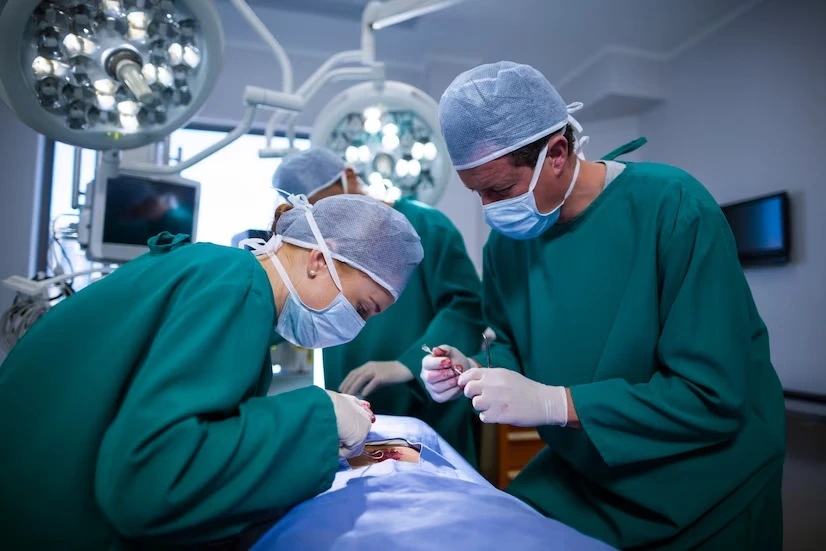
Bochdalek hernia or posterolateral diaphragmatic hernia is prominently a congenital defect, although it can also develop in adults. Bochdalek hernia is named after the Czech pathologist Vincenz Alexander Bochdalek and is often referred to as a diaphragmatic hernia. Bochdalek hernias are fatal and must be treated urgently upon diagnosis. What is a Bochdalek Hernia? A Bochdalek hernia is a weakness that develops in the diaphragmatic region mostly due to the incomplete development of the diaphragm in the embryo. The Bochdalek hernia occurs in the posterior costal, which is towards the back on the side of the ribcage and near the 10th and 11th pair of ribs. The foramen or opening in the diaphragm gives access to the abdominal and thoracic cavities resulting in the movement of abdominal organs into the thoracic cavity. Bochdalek hernias occur mostly on the left side of the body and are highly fatal, especially to babies. Symptoms of Bochdalek Hernia Bochdalek hernia symptoms in babies are identified through an abnormal chest appearance, with one side being larger than the other and a caved-in abdomen. Adults may also experience similar issues. Other symptoms of a Bochdalek hernia include: Abdominal pain Chest pain Shortness of breath Indigestion Intestinal obstruction Constipation Bloating Difficulty in eating Discoloration of skin in the area of the hernia Faster heart rate Causes of Bochdalek Hernia Bochdalek hernias arise due to a congenital defect in the diaphragm when the posterolateral diaphragmatic foramina fails to close during fetal growth. The reason for the failure of the diaphragm to close during embryo development is unidentified. However, proper prenatal care is suggested for the prevention of Bochdalek hernia in babies. Bochdalek hernias in adults may arise due to any blunt injuries or surgical interventions in the chest or abdominal region. Complications of Bochdalek Hernia The complications of Bochdalek hernia include incarceration, strangulation, and perforation. Bochdalek hernias can obstruct the bowel causing ileus that impedes food movement in the digestive tract. Bochadalek hernias are considered highly fatal due to their ability to congest organs in the thoracic cavity. Infants are more prone to the morbidity of Bochdalek hernia. Therefore the hernia must be treated as quickly as possible Treatment for Bochdalek Hernia Bochdalek hernias demand surgery all the time as they escalate into severity rapidly. Imaging tests such as computed tomography (CT) scans, ultrasound scans, Magnetic Resonance Imaging (MRI), X-rays, and arterial blood gas tests are widely employed to diagnose a Bochdalek hernia. Laparoscopic surgery is commonly used to repair Bochdalek hernia. The hernia repair surgery removes abdominal organs from the chest and places them in the right position. Then a mesh is placed in the weak spot to strengthen it and prevent future hernia. Preventing Bochdalek Hernia Congenital Bochdalek hernias are highly unpreventable and proper prenatal care is generally prescribed for prevention of the hernia in infants. Adults can maintain a healthy lifestyle, get treated for blunt injuries or traumas, and check for Bochdalek hernias after thoracic or abdominal surgeries to stay cautious of the occurrence of the hernia. Conclusion Bochdalek hernias can be highly fatal in babies and must be handled with utmost care. Adults also face Bochdalek hernias, so it’s important to approach a hernia surgeon without delay. The latest hernia repair techniques are very advanced and can repair a Bochdalek hernia successfully. Maintain a healthy lifestyle and consult a hernia specialist if you experience any kind of Bochdalek hernia symptoms. Contact Form NameEmailPhone NoYour MessageBook Consultation Dr. K. Amilthan MBBS., MS., FMAS., FALS. Heal Your Hernia Now: 15+ Years of Experience 3,000+ Surgeries Your Journey to Wellness Begins with us. Book Appointment Edit Template FAQ’s Do Bochdalek hernias need surgery? Yes, Bochdalek hernias desperately require surgery. Since Bochdalek hernias can perforate and strangulate the organs in the chest cavity it is essential to repair the hernia using surgery. How do you fix a Bochdalek hernia? Surgery is employed to fix a Bochdalek hernia. The herniated organs are moved to their original position and a mesh is placed to seal the opening. Can you live with a Bochdalek hernia? You can live with a Bochdalek hernia until it gets complicated. A strangulated, obstructed, or incarcerated hernia needs immediate surgical intervention as it is fatal. Dr. Amilthan Dr. Amilthan is a renowned laparoscopic hernia surgeon based in Chennai, with over 15+ years of experience in general surgery. He completed his MBBS and MS in General Surgery at Kilpauk Medical College and Government Royapettah Hospital in Chennai. Edit Template All Posts Hernia Blog MAYDL’S HERNIA A hernia occurs when an organ or any other part of your body pushes through the muscle and surrounding tissue… Read More Gilbert Classification of Hernia An inguinal hernia occurs when the organs push through and bulge against the weak muscles of the abdomen. An effective… Read More Difference Between Hernia And Appendix Whether you have a hernia or appendicitis, the main symptom you will experience is stomach pain. So, it might be… Read More Load More End of Content.
When to Have Umbilical Hernia Surgery
Deciding when to have umbilical hernia surgery is a nuanced journey influenced by various factors. In this comprehensive guide, we’ll explore the considerations surrounding the timing of this surgery, addressing specific scenarios for newborns, children, adults, and pregnant women. When Should You Have Umbilical Hernia Surgery? The decision to undergo umbilical hernia surgery is often prompted by factors such as persistent pain, discomfort, or interference with daily activities. It’s a nuanced choice that involves a collaborative discussion between the individual and their healthcare team. When the hernia starts impacting the quality of life, surgery becomes a viable solution. Preparing for umbilical hernia surgery beforehand can help you recover more quickly. When to Have Umbilical Hernia Surgery for Newborns? In the case of newborns, umbilical hernias are relatively common and often resolve on their own. Surgery is typically considered if the hernia persists beyond the age of 2 or if complications arise. However, most infantile umbilical hernias resolve spontaneously, and surgical intervention is seldom required during infancy. When to Have Umbilical Hernia Surgery for Children? For older children, the timing of umbilical hernia surgery depends on factors such as the size of the hernia, associated symptoms, and the child’s overall health. If the hernia shows no signs of self-resolution, causes pain, or enlarges, surgery may be recommended. The decision is made collaboratively, considering the child’s well-being and future implications. When to Have Umbilical Hernia Surgery for Adults? In adults, the decision to have umbilical hernia surgery is guided by the impact on daily life. If the hernia causes persistent pain, becomes incarcerated or strangulated, or interferes with normal activities, surgical intervention is usually recommended. The timing is individualized, taking into account the person’s overall health and consult the Best Hernia surgeon for Treatment. When to Have Umbilical Hernia Surgery for Pregnant Women? Pregnancy introduces unique considerations into the decision-making process. While umbilical hernias discovered during pregnancy may be monitored, surgical intervention is typically deferred until after childbirth. However, if a hernia becomes incarcerated or poses significant risks, surgery may be considered during pregnancy, with careful evaluation of potential benefits and risks. Different types of Umbilical Hernia Surgery There are different types of Surgical options available for Umbilical Hernia Let us see them one by one Open Surgery: Traditional approach: A surgeon makes an incision above or around the navel, pushes the protruding tissue back into the abdomen, and reinforces the weakened area with mesh or stitches.Pros: Well-established technique, effective for large or complex hernias.Cons: Longer recovery time, visible sca Laparoscopic Surgery: Minimally invasive approach: The Laparoscopic Hernia Repair is done Using tiny incisions and a laparoscope (thin lighted tube with a camera), the surgeon views the hernia and repairs it with mesh or stitches.Pros: Less pain, faster recovery, smaller scars.Cons: May not be suitable for large or complex hernias, requires general anesthesia. Robotic Hernia Surgery Minimally invasive approach: During the Robotic Hernia Surgery The Laparoscopic Hernia Repair is done Using tiny incisions and a laparoscope (thin lighted tube with a camera), the surgeon views the hernia and repairs it with mesh or stitches.Pros: Less pain, faster recovery, smaller scars.Cons: May not be suitable for large or complex hernias, and requires general anesthesia. Does Umbilical Hernia Cause Pain? The simple answer is it depends. Not all umbilical hernias cause pain, especially in children, where they are most common. In fact, many children with umbilical hernias may not even be aware of them. However, adults and older adults are more prone to experiencing pain with umbilical hernias. This pain can manifest in various ways, depending on the size, severity, and individual pain tolerance. Umbilical Hernia Pain in Children: Usually painless or presents with a small, soft bulge near the navel.May become noticeable during crying, coughing, or straining.Rarely requires medical intervention unless it becomes incarcerated or significantly larger. Umbilical Hernia Pain in Adults: More likely to cause discomfort, ranging from a dull ache to sharp, stabbing pain.Pain can worsen with specific activities like lifting, straining, or coughing.A feeling of fullness or bloating around the navel is common.Larger or incarcerated hernias can cause severe pain, nausea, and vomiting, warranting immediate medical attention. Umbilical Hernia Pain in Aged People: Similar to adults but may be masked by other age-related aches and pains.Early diagnosis and management are crucial to prevent complications. Managing Umbilical Hernia Pain: For mild pain, over-the-counter pain relievers like ibuprofen or acetaminophen can offer relief.Warm compresses applied to the area can promote blood flow and ease muscle tension.Wearing loose-fitting clothing avoids pressure on the bulge and reduces discomfort.Limiting strenuous activities minimizes further irritation. Which Doctor to Consult For Umbilical Hernia: A general practitioner can diagnose and manage most umbilical hernias.In some cases, referral to a specialist like a gastroenterologist or surgeon may be necessary. Nursing care plan for umbilical hernia Although this illness frequently affects young children, it can also impact adults. so is important to know the Umbilical Hernia Care Plan. it is important to be clear on all the aspects starting from your Diet after your umbilical Hernia surgery, Travel after your Hernia Surgery, what to wear after the surgery and How to sleep after umbilical hernia surgery. Conclusion Navigating the decision of when to have umbilical hernia surgery involves a personalized approach tailored to the individual’s age, health, and circumstances and also the umbilicar hernia surgery cost. For newborns, patience is often key as many hernias resolve without intervention. In children and adults, the timing is influenced by the impact on daily life and overall health. Pregnant women face additional considerations, balancing the need for surgical intervention with the well-being of both mother and baby. understanding when to have umbilical hernia surgery requires open communication with healthcare professionals. By aligning the timing of surgery with the individual’s needs and circumstances, healthcare teams work together with patients to navigate the path toward improved well-being. Contact Form NameEmailPhone NoYour MessageBook Consultation Dr. K. Amilthan MBBS., MS., FMAS., FALS. Heal Your Hernia Now: 15+ Years of Experience 3,000+ Surgeries Your Journey to Wellness Begins with us. Book Appointment Edit Template Dr. Amilthan Dr. Amilthan is a renowned laparoscopic hernia surgeon based in
Incisional Hernia After Laparoscopic Surgery
Incisional hernia after laparoscopic surgery is a condition that can develop when a surgical incision in the abdominal wall does not heal properly. Although laparoscopic surgery uses small incisions, a hernia can still occur if the abdominal muscles remain weak or the wound fails to close completely. Early diagnosis and proper treatment can help prevent serious complications. Can Laparoscopic Surgery Cause Incisional Hernia? Yes, laparoscopic surgeries can cause incisional hernia. Though laparoscopic surgeries are minimally invasive, hernias can still occur when the minimal incisions do not close as required. A study published in March 2022 inferred that elective laparoscopic colorectal surgery risked the occurrence of incisional hernia in patients on the following grounds: Body Mass Index (BMI) above 25 kg/m2 Female sex History of Liver Disease So, aside from the direct consequences of laparoscopic surgeries, factors external to the surgery also impact incisional hernia occurrence. What are the Symptoms of an Incisional Hernia After Laparoscopic Surgery? The following symptoms can help you identify an incisional hernia after laparoscopic surgery A visible bulge in the site of the incision Bulging that appears at the incision site while coughing, sneezing, or lifting weights Bloating of the abdomen Constipation Diarrhea Nausea Vomiting Fever Increased heart rate Chronic pain in the local and surrounding region What Causes Incisional Hernia After Laparoscopic Surgery? The reasons for the cause of incisional hernia after laparoscopic surgery include Infection of the incision wound Improper incision suturing Obesity Smoking Renal failure, diabetes, or lung diseases Premature strenuous physical activities after abdominal surgery How Do You Prevent an Incisional Hernia After Laparoscopic Surgery? You can prevent an incisional hernia after laparoscopic surgery by Not being involved in strenuous activities right after an abdominal surgery Maintaining a proper BMI Quitting smoking and excess alcohol consumption Managing medical conditions like diabetes or renal issues Incisional hernias are either reducible or irreducible. Reducible hernias can be managed without surgery. But irreducible hernia indicates possible incarceration or strangulation and demands immediate surgical intervention. How Long After Laparoscopic Surgery Can You Get an Incisional Hernia? Incisional hernias may occur at any time after abdominal laparoscopic surgery. However, most commonly, incisional hernias are anticipated three to six months after abdominal laparoscopic surgery if the individual is prone to factors that cause an incisional hernia. Conclusion Incisional hernias can occur despite open or laparoscopic surgeries, as the surgeries are not the main reason for the occurrence of hernias. Factors such as BMI, liver diseases or diabetes, delivery through C-section, and unhealthy lifestyle choices also contribute to the occurrence of incisional hernias despite improper incision suturing and infections. To prevent incisional hernias, do not strain the abdomen after any abdominal surgery, and give your body enough rest. Restrain from strenuous physical activities right after abdominal surgery as well. If you are unclear about how to deal with an incisional hernia after laparoscopic surgery, consult a hernia specialist. Be aware of incisional hernias and take precautions to prevent them as early as possible. Contact Form NameEmailPhone NoYour MessageBook Consultation Dr. K. Amilthan MBBS., MS., FMAS., FALS. Heal Your Hernia Now: 15+ Years of Experience 3,000+ Surgeries Your Journey to Wellness Begins with us. Book Appointment Edit Template FAQ’s 1) What happens if you don’t fix an incisional hernia? If you do not fix an incisional hernia, there exists a risk of the hernia getting severe and complicated. Risks such as strangulation, obstruction, and incarceration of the incisional hernia exist. 2) Is walking good for an incisional hernia? Less-intense exercise, such as walking, is acceptable for an incisional hernia as long as it does not strain your abdomen muscles and cause your hernia to get severe. 3) Can incisional hernias get bigger? Marks and devious Semikoli but the Little Blind Text didn’t listen. She packed her seven versalia, put her initial into the belt and made herself on the way. Dr. Amilthan Dr. Amilthan is a renowned laparoscopic hernia surgeon based in Chennai, with over 15+ years of experience in general surgery. He completed his MBBS and MS in General Surgery at Kilpauk Medical College and Government Royapettah Hospital in Chennai. Edit Template All Posts Hernia Blog Herniotomy Surgery A hernia is a bulge or swelling that happens when an organ or tissue pushes through a weak muscle and… Read More Bochdalek Hernia Bochdalek hernia or posterolateral diaphragmatic hernia is prominently a congenital defect, although it can also develop in adults. Bochdalek hernia… Read More Incisional Hernia After Laparoscopic Surgery Incisional hernia after laparoscopic surgery is a condition that can develop when a surgical incision in the abdominal wall does not… Read More Load More End of Content.
Incisional hernia after C-section
An incisional hernia that occurs after a C-section is called a postpartum hernia. It is a complication that arises due to the C-section procedure. If you sense a bulge accompanied by pain or discomfort in the area of your C-section scar, it indicates an incisional hernia. Incisional hernias after a C-section may or may not be symptomatic. But they require surgical intervention for a complete cure. Incisional Hernia After C-Section If the abdominal lining or bowel parts come through the caesarean surgical incision scar, it is an incisional hernia that occurs after a C-section. Incisional hernias after a C-section may not be common. Nevertheless, they can be expected due to reasons such as weak abdominal muscles and unhealed incision scars. According to a 2014 study, females who had a midline incision for C-section delivery were at higher risk for hernias after the procedure. Also, the risk was higher during the first three years after a C-section. If the abdominal lining or bowel parts come through the caesarean surgical incision scar, it is an incisional hernia that occurs after a C-section. Incisional hernias after a C-section may not be common. Nevertheless, they can be expected due to reasons such as weak abdominal muscles and unhealed incision scars. According to a 2014 study, females who had a midline incision for C-section delivery were at higher risk for hernias after the procedure. Also, the risk was higher during the first three years after a C-section. Symptoms of Incisional Hernia After a C-Section Symptoms that help identify an incisional hernia after a C-section include Bulge near the incision site Pain in the local and surrounding region Nausea Vomiting Constipation Diarrhea Fever Incisional hernia symptoms after a C-section can indicate the severity of the condition and highlight the need for prompt medical attention. A symptomatic incisional hernia may be irreducible and suggest an obstructed or strangulated hernia. A complicated hernia is often accompanied by sharp pain. Causes of Incisional Hernia After a C-Section Incisional hernias after a C-section occur due to A large cesarean incision that has not healed Diabetes or renal issues Weak abdominal tissues Obesity Being involved in strenuous physical activities before the healing of the incison Treatment for Incisional Hernia After a C-Section If the incisional hernia is asymptomatic, it can be managed without surgery. But an incisional hernia after a C-section poses a threat of damaging more of the wound region, leading to possible bleeding and infection. So it is best to electively operate on an incisional hernia after a C-section. Treatment options available to treat incisional hernias after a C-section include Open surgery Laparoscopic surgery Robotic surgery The choice of surgery is based on the severity of the hernia. A mesh will be placed over the weak area to prevent the recurrence of the hernia. Recovery from Incisional Hernia After C-Section Based on the choice of surgical methods, the recovery period after an incisional hernia repair may vary. Major open and laparoscopic surgeries will take around two to three months for a complete recovery. With minimally invasive surgeries, you will be able to return to work after two or three weeks of rest. You can also begin driving after stopping pain medications. Ultimately, the recovery period differs for every patient, and it depends on the individual’s overall health, age, and other factors. Conclusion Incisional hernia after a C-section can be discomforting. An obstructed and strangulated incisional hernia can be fatal. So. Instead of bearing the pain, it is best to go with hernia repair for the better health of the body. Also, take adequate rest after a C-section to prevent incisal hernias. Put away any strenuous physical activity and take a protein-rich diet to allow the abdominal wall to heal and strengthen. An incisional hernia after a C-section can be easily repaired with the latest surgical procedures that cause less pain and grant a faster recovery. For more information on incisional hernias after a C-section, contact a hernia specialist to learn more about them and how to deal with them. Contact Form NameEmailPhone NoYour MessageBook Consultation Dr. K. Amilthan MBBS., MS., FMAS., FALS. Heal Your Hernia Now: 15+ Years of Experience 3,000+ Surgeries Your Journey to Wellness Begins with us. Book Appointment Edit Template FAQ’s What is the best treatment for an incisional hernia? The best treatment for an incisional hernia is surgery. Without surgery, an incisional hernia cannot be completely cured. It is not advisable to take incisional hernias lightly, as they may turn fatal. When should I worry about an incisional hernia? Obstructed, incarcerated, and strangulated incisional hernias are worrisome. When the incisional hernia turns symptomatic and the abdominal pain increases, you can be sure that the hernia is becoming complicated. What are the complications of a strangulated incisional hernia? A strangulated incisional hernia can block the bowels, cause internal bleeding, and fill the abdominal cavity with fluid. All of these complications pose a threat to the life of a person and indicate the need for immediate medical intervention. Dr. Amilthan Dr. Amilthan is a renowned laparoscopic hernia surgeon based in Chennai, with over 15+ years of experience in general surgery. He completed his MBBS and MS in General Surgery at Kilpauk Medical College and Government Royapettah Hospital in Chennai. Edit Template All Posts Hernia Blog Incisional hernia after C-section A surgical procedure used to deliver a baby by making incisions in the abdomen and uterus is called a C-section…. Read More MAYDL’S HERNIA A hernia occurs when an organ or any other part of your body pushes through the muscle and surrounding tissue… Read More Gilbert Classification of Hernia An inguinal hernia occurs when the organs push through and bulge against the weak muscles of the abdomen. An effective… Read More Load More End of Content.
MAYDL’S HERNIA
A hernia occurs when an organ or any other part of your body pushes through the muscle and surrounding tissue that contains it. It mostly happens in the abdomen or groin areas. Hernia may or may not be painful for most people. There are different types of hernia that are distinguished based on their location and the type of bulge. Maydl’s hernia is one such type of hernia. In this article, let’s take a deep look at what it is and how it affects the human body. What is Maydl’s Hernia? Maydl’s hernia, otherwise called “hernia-in-W,” is a rare type of hernia that affects a person’s bowels. It is one type of strangulated inguinal hernia. This condition is often seen in men and on the right side of the abdomen. Here, the hernial sac contains two bowel loops folded in the form of the letter W, with the center part of the loop being intra-abdominal. The center part that stays outside the hernial sac is called retrograde. The hernial sac constrains the bowel loop, causing the center part outside the sac to become strangulated, either alone or with the bowel in the hernial sac. This may result in necrosis of the intra-abdominal loop. Proper examination needs to be conducted when testing for Maydl’s hernia. Missing out on any sites of necrosis can lead to serious complications. Is Maydl’s Hernia a Common Disease? The name Maydl’s hernia is derived from Karel Maydl, an Austrian surgeon who first described this type of hernia in 1895. This type of hernia is more prominent in Africa, where there are several cases of untreated simple hernia. Leaving the simple hernia untreated for a prolonged period of time is one of the major factors that leads to Maydl’s hernia. Complications of Maydl’s hernia Maydl’s hernia is a rare type of hernia that can be quite lethal if left undiagnosed and untreated. It can lead to several complications that can affect the health and body of the affected person. So it is instructed to consult the Best Hernia surgeon as quickly as possible. Below are some complications that arise from Maydl’s hernia. Necrosis or tissue death of the intra-abdominal loop. This happens when the hernial sac obstructs the blood supply to the intra-abdominal loop. Acute intestinal obstruction. A blockage that blocks the food or liquid from passing through the intestine. Peritonitis by intestinal perforation. Peritonitis means inflammation in the peritoneum. This is where a hole appears in the stomach or small intestine that leaks the food or other fluids into the abdomen. This can lead to serious issues like internal bleeding and blood loss. Hydroelectrolytic disorders like acute dehydration, acute renal failure, etc. Conclusion Maydl’s hernia is a serious issue and may be lethal if left untreated for a long time. Find out Which Doctor to consult for this Hernia and undergo all the procedures and tests to understand the extent of the issue. A laparoscopic procedure is usually needed to remove the hernia. Discuss with your surgeon and undergo the necessary procedures to rectify the situation. Last updated: March 2026 – This article has been updated with the latest information on hernia diagnosis and laparoscopic surgery options in Chennai. Contact Form NameEmailPhone NoYour MessageBook Consultation Dr. K. Amilthan MBBS., MS., FMAS., FALS. Heal Your Hernia Now: 15+ Years of Experience 3,000+ Surgeries Your Journey to Wellness Begins with us. Book Appointment Edit Template FAQ’s 1. Why is it called Maydl’s hernia? The name Maydl’s hernia is derived from Karel Maydl, an Austrian surgeon who first described this type of hernia in 1895. This type of hernia is more prominent in Africa, where there are several cases of untreated simple hernia. Leaving the simple hernia untreated for a prolonged period of time is one of the major factors that leads to Maydl’s hernia. 2. What are the two most common types of hernia? The most frequent type of hernia is an inguinal hernia, which affects about 25 out of 100 males and 2 out of 100 women at some point in their lives. Umbilical and incisional hernias are the second most frequent types of hernias. 3. What are the five warning signs of hernia? Here are some symptoms you can look out for if you suspect you have a hernia. You can see or feel a bulge in the suspected area. The area might be painful. You might feel some pressure in the affected area. A tugging sensation in the scrotum (for men). The pain worsens when you do activities or put pressure on the area. 4. Which type of hernia is the most serious? When protruding tissue can’t be forced back into place, it develops into an incarcerated hernia, which causes persistent pressure or discomfort on the body. Because the region bulging through loses blood flow, it can lead to strangulated hernia and cause necrosis, a medical emergency. Dr. Amilthan Dr. Amilthan is a renowned laparoscopic hernia surgeon based in Chennai, with over 15+ years of experience in general surgery. He completed his MBBS and MS in General Surgery at Kilpauk Medical College and Government Royapettah Hospital in Chennai. Edit Template All Posts Hernia Blog MAYDL’S HERNIA A hernia occurs when an organ or any other part of your body pushes through the muscle and surrounding tissue… Read More Gilbert Classification of Hernia An inguinal hernia occurs when the organs push through and bulge against the weak muscles of the abdomen. An effective… Read More Difference Between Hernia And Appendix Whether you have a hernia or appendicitis, the main symptom you will experience is stomach pain. So, it might be… Read More Load More End of Content.

Gilbert Classification of Hernia
An inguinal hernia occurs when the organs push through and bulge against the weak muscles of the abdomen. An effective classification of the types of inguinal hernia can serve as an anatomical blueprint that can help doctors evaluate its functions and features. This can assist doctors in determining the appropriate treatment method for each type of hernia. Gilbert, in 1989, classified inguinal hernia into 5 types based on their features. Rutkow and Robbins further expanded this classification in 1993 and added two more types of inguinal hernia. In this article, let’s look at all 7 types of Hernias in the Gilbert classification. What is the Gilbert classification of Hernia? Gibert classified inguinal hernias into five types in 1989 to give surgeons an easier way to analyze each hernia and use the best surgical method. The 5 Types of Hernia’s Gilbert classified inguinal hernia based on The size of the internal ring, The presence or absence of the peritoneal sac and The integrity of the posterior wall. Type 1: Snug internal ring, intact canal floor Indirect inguinal hernia. Peritoneal sac passing through an intact deep internal ring of less than one fingerbreadth (less than 1.5 cm.) Intact posterior wall. Type 2: One finger breadth internal ring, intact canal floor Indirect inguinal hernia. Peritoneal sac passing through a moderately dilated deep internal ring of one fingerbreadth (1.5– 4 cm). Intact posterior wall. Example: Bubonocele hernia. Type 3: Two fingerbreadth internal ring, defective canal floor Indirect inguinal hernia. Peritoneal sac passing through a large dilated and distorted deep internal ring of two or more fingerbreadths (more than 4 cm.) Part of the posterior wall is defective. Examples: Sliding hernia (Sliding Inguinal Hernia) and scrotal hernia. Type 4: Entire canal floor defective, no peritoneal sac anterior to canal floor, intact internal ring Direct inguinal hernia. Intact deep internal ring. The entire posterior wall is defective, or multiple defects in the posterior wall. No peritoneal sac passing through. Type 5: Diverticulum defect admitting no more than one finger, internal ring intact Direct inguinal hernia. Intact deep internal ring. Diverticular defect of the posterior wall of no more than one fingerbreadth (less than 2 cm.) No peritoneal sac passing through. Gilbert’s classification of Hernia Expanded from 5 types to 7 Gilbert had classified Hernia into 5 types, Four years later it was Expanded to 7 Types. Who expanded the Gilbert classification of hernia? The Gilbert classification of hernia was then expanded by Rutkow and Robbins in 1993. They added two more types of hernia to this classification. What are the 2 more types of Hernias? Type 6: Pantaloon hernia Pantaloon Hernia is A combination of direct and indirect hernia. Also called Romberg’s hernia, dual/double hernia, or saddlebag hernia. Both sides of the inferior epigastric vessels are pushed through by the hernial sac. Type 7: Femoral hernia This type of Hernia which is widely known as the Type 7 Gilbert Hernia Most commonly found in females. A loop of the intestine bulges through the abdominal wall in the lower abdomen near the thigh. What is Direct Hernia And Indirect Hernia? The anatomical location of the hernial sac is what distinguishes indirect from direct inguinal hernias. Direct hernias are openings in the lower abdomen that protrude through the posterior (rear) wall of the inguinal canal on either side of the groin. At the tip of the inguinal canal, indirect hernias protrude through the inguinal ring. So it is advised to consult the Best Hernia surgeon for an effective treatment. Conclusion There are other classifications for Hernias such as the Nyhus Classification but standing out from others The Gilbert classification of hernia gives surgeons a clear classification of the types of inguinal hernia and the proper treatment method. Identifying the hernia early and undergoing surgery to repair it is advised to prevent serious complications. Last updated: March 2026 – This article has been updated with the latest information on hernia diagnosis and laparoscopic surgery options in Chennai. Contact Form NameEmailPhone NoYour MessageBook Consultation Dr. K. Amilthan MBBS., MS., FMAS., FALS. Heal Your Hernia Now: 15+ Years of Experience 3,000+ Surgeries Your Journey to Wellness Begins with us. Book Appointment Edit Template FAQ’s 1. What is the Type 7 Gilbert hernia? In 1993, Rutkow and Robbins added two types (Type 6 and Type 7) of inguinal hernia to the 5-types Gilbert classification of hernia. The type 7 inguinal hernia is the femoral hernia. 2. What is a pantaloon hernia? Two adjacent hernia sacs in the inguinal and/or femoral areas on the same side are combined to form a pantaloon hernia. Therefore, both sides of the inferior epigastric vessels have the sacs. Pantaloon hernia is a combination of direct and indirect hernias. 3. Why is it called Triangle of Doom? The deadly triangle, often known as the triangle of doom, is a triangular area bounded by the vas deferens, the testicular arteries, and the peritoneal fold during a laparoscopic inguinal hernia repair. The external iliac artery and vein are located within its limits. Dr. Amilthan Dr. Amilthan is a renowned laparoscopic hernia surgeon based in Chennai, with over 15+ years of experience in general surgery. He completed his MBBS and MS in General Surgery at Kilpauk Medical College and Government Royapettah Hospital in Chennai. Edit Template All Posts Hernia Blog Herniotomy Surgery A hernia is a bulge or swelling that happens when an organ or tissue pushes through a weak muscle and… Read More Bochdalek Hernia Bochdalek hernia or posterolateral diaphragmatic hernia is prominently a congenital defect, although it can also develop in adults. Bochdalek hernia… Read More Incisional Hernia After Laparoscopic Surgery Incisional hernia after laparoscopic surgery is a condition that can develop when a surgical incision in the abdominal wall does not… Read More Load More End of Content.

Difference Between Hernia And Appendix
Whether you have a hernia or appendicitis, the main symptom you will experience is stomach pain. So, it might be confusing for you to understand what the cause of the pain is. Most people don’t know the distinctions between a hernia and appendicitis and often confuse their symptoms with each other. So, in this article, we are going to look into both hernia and appendicitis and understand the difference between hernia and appendix. This will help you understand each issue in detail and help you recognize them when you experience the symptoms. What Are the Key Differences Between Hernia and Appendix? It is important to understand the differences between these two conditions to undergo the right treatments to cure the issue. Now, let’s look at the definition, symptoms, and causes of appendicitis and hernia. Hernia Appendix Definition Bulging of an internal organ or tissue through a weak muscle or tissue wall Inflammation of the appendix, a small tube-like organ in the lower-right abdomen Symptoms Bulge in affected area (especially when straining, coughing, or laughing), abdominal pain, discomfort, swelling Pain in lower-right abdomen (may start around belly button), worsening pain with movement, nausea, vomiting, loss of appetite, constipation/diarrhea, bloating, gas, low fever Causes Weak spot in muscle wall, injury, heavy lifting, pregnancy, genetics, obesity, chronic coughing/sneezing Blockage in appendix lining, appendix stones, colitis Location Varies depending on type of hernia (most common: inguinal – groin, hiatal – upper stomach) Lower-right abdomen Treatment Surgery to repair weak spot and return organ/tissue to proper position Surgery to remove appendix (appendectomy) Urgency Not always an emergency unless strangulation occurs Requires immediate medical attention and surgery Connection McBurney’s hernia and Amyand’s hernia can involve presence of appendix in hernia sac In most cases, not directly related Appendix An appendix is a small tube-like organ that is located on the lower-right side of your abdomen. It is a protrusion (about 3–4 inches long) that is attached to the end of your large intestine. The appendix is not necessarily essential for survival, and people can live on even without it. Though it is not an essential organ in the body, it can cause to immense pain if it gets inflamed or infected. This condition is called appendicitis (inflammation of the appendix). You must immediately consult a doctor and undergo the necessary medical treatment to rectify the situation before it leads to other medical issues. What are the symptoms of the Appendix? The main symptom you might experience when you have appendicitis is pain in the lower right abdominal area. For some people, the pain might start around the belly button and then move to the lower right abdomen. Below are some other symptoms you might experience if you were diagnosed with appendicitis. Worsening abdominal pain every time you sneeze, cough, walk, or make any sudden movements. Nausea, vomiting, and loss of appetite Constipation and diarrhea Bloating and gas Low fever that might rise if the situation worsens. What are the causes of the Appendix? Now that we have discussed the symptoms of appendicitis, let’s look at its causes. Blockage in the appendix lining. This can cause a bacterial infection, causing the appendix to swell and be filled with pus. The appendix might burst and cause serious complications if it is not treated immediately. Hardened poop (appendix stones). These are hard, calcified fecal deposits stuck in the appendix opening. They carry bacteria that can infect the appendix. Colitis, an inflammation in the colon, can affect the appendix. The infection may spread to the appendix, or it might irritate the appendix. Hernia A hernia happens when an internal organ or tissue bulges through a tissue wall or weak muscle in the body. They are usually a result of injury, heavy lifting, pregnancy, genetics, obesity, etc. There are various types of hernias based on the location of the issue, but the most common hernias are inguinal hernia (hernia in the groin areas) and hiatal hernia (hernia in the upper stomach). What are the symptoms of Hernia? The most common symptom of hernia is a visible bulge you can see around the affected area. This bulge usually appears when you laugh, cough, or do some physical activity and disappears after. Other symptoms include abdominal pain, discomfort, swelling, etc. What are the causes of Hernia? Below are some of the major causes and risk factors of hernia. It is essential to know these factors so that you can Prevent Hernia from Occurring If you have a weak spot or a pre-existing opening in your body that allows nearby tissue or organ to push through the opening. A traumatic injury can weaken the muscle and let the organ pass through. If you put too much pressure on your abdomen. This can weaken your tissues. Chronic coughing or sneezing can weaken the tissues and muscles, leading to hernias. Is there any connection Between Hernia And Appendix There can be a few surprising connections between hernias and the appendix, although they aren’t always directly related McBurney’s hernia: the appendix can be present within a femoral hernia, a type of hernia that occurs in the groin near the thigh. This condition is known as McBurney’s hernia Amyand’s Hernia: This rare condition involves the appendix being present within the sac of an inguinal hernia (in the groin). While the appendix is normally located in the lower right abdomen, it can accidentally become trapped during hernia formation. In most cases, the appendix in an Amyand’s hernia is healthy, but it can also be inflamed or even perforated, leading to serious complications. Conclusion It is quite common for you to get confused between appendicitis and hernia. It is best to look for the Best Hernia Surgeon to diagnose which one you have and take the right treatments for the issue. Both conditions can be treated, and you can fully recover from them. So, visit your doctor as early as you start experiencing the symptoms and undergo the necessary treatments. Last updated: March 2026 – This article has been updated with the latest information
Phantom Hernia
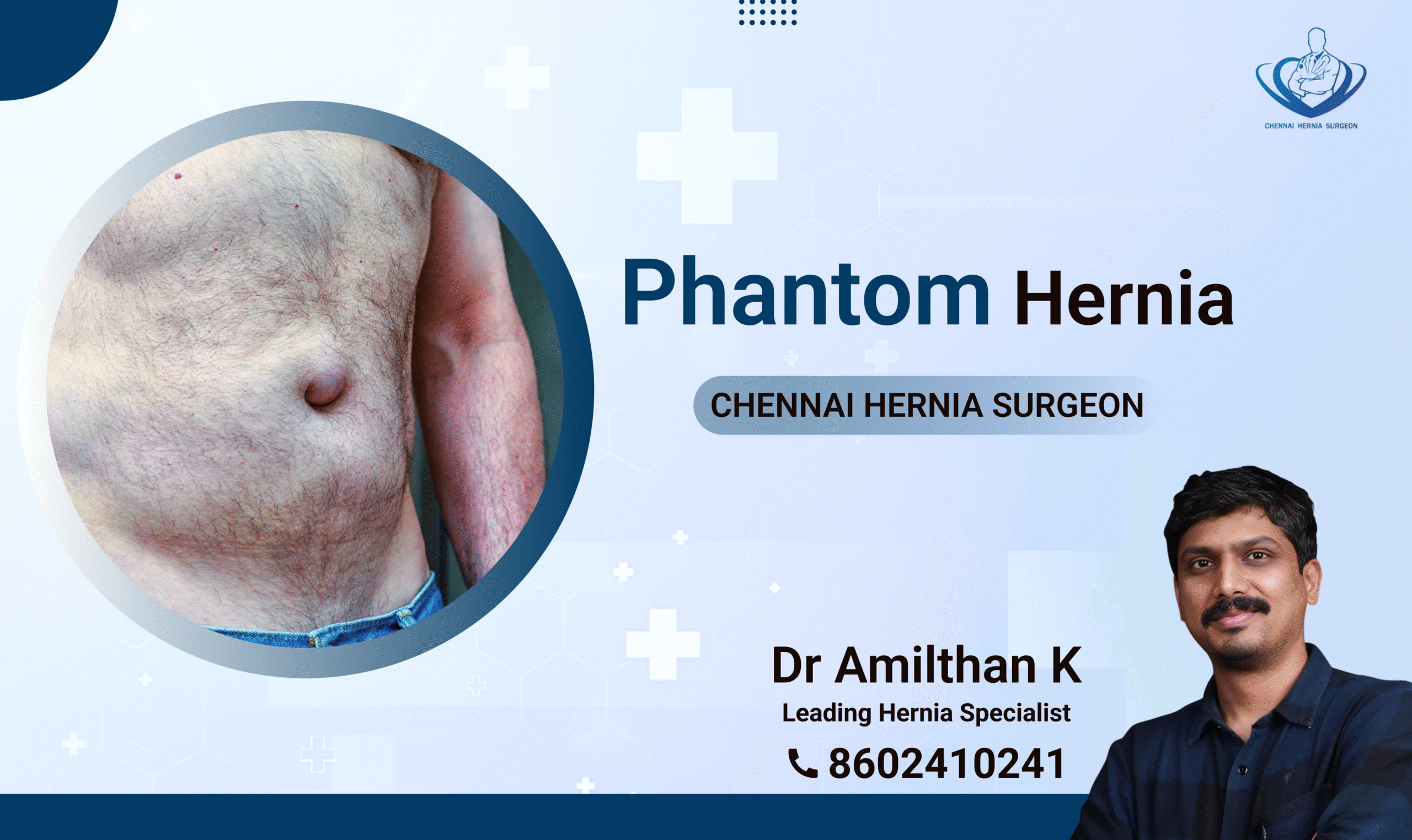
In the intricate landscape of hernias, there exists a phenomenon that challenges the conventional understanding—phantom hernia. This exploration embarks on a journey to unravel the nature of phantom hernia, distinguishing its unique characteristics, investigating potential causes, deciphering its elusive symptoms, exploring available treatments, and contemplating preventive measures. What is Phantom Hernia Phantom hernia, a term resonating with intrigue, refers to a condition where individuals experience symptoms akin to a hernia without any observable physical evidence of herniation. It introduces a fascinating dimension to the mind-body connection, prompting questions about how our perceptions influence the manifestation of physical sensations. How is Phantom Hernia Different from Other Hernias What sets Phantom Hernia apart is its ethereal nature. Unlike traditional hernias characterized by tangible bulges or protrusions, phantom hernias manifest symptoms without apparent anatomical evidence. This distinction adds complexity to diagnosis and treatment, as the absence of a physical counterpart challenges conventional approaches. Causes of Phantom Hernia The origins of phantom hernia delve into the intricate realms of psychology. Stress, anxiety, or past experiences with hernias can contribute to the manifestation of symptoms. Recognizing and addressing these psychosocial triggers is pivotal in comprehending and approaching phantom hernia from a holistic standpoint. Symptoms of Phantom Hernia The symptoms of phantom hernia closely mirror those of tangible hernias—pain, discomfort, and a sensation of bulging or pressure in the abdominal region. However, in the case of phantom hernias, these sensations lack the physical presence of a herniated tissue. Navigating these elusive symptoms requires a nuanced understanding of the intricate interplay between the mind and the body. Treatments for Phantom Hernia Managing phantom hernias necessitates a comprehensive approach that addresses both the physical and psychological facets. Pain management, counseling, and therapies fostering a mind-body connection play crucial roles. Collaborative efforts between healthcare professionals and individuals experiencing phantom hernia symptoms are paramount for effective management so it is advised to consult the Hernia Specialist for treatment While phantom hernia isn’t inherently dangerous, the bulge and associated discomfort can impact daily life. Thankfully, management options are available, focusing on strengthening the abdominal wall and alleviating symptoms. Non-Surgical Treatments: These are the first line of defense for most cases and can effectively manage phantom hernia in the long run: Lifestyle modifications:Weight management: Losing weight if overweight or obese can significantly reduce pressure on the abdominal wall, easing the bulge and discomfort.Activity adjustments: Avoiding heavy lifting and activities that strain the abdominal muscles, like intense exercise or strenuous chores, helps prevent further weakening.Smoking cessation: Quitting smoking improves lung function and reduces chronic coughing, a major contributor to abdominal muscle strain. Surgical Intervention: In rare cases, if the phantom hernia causes significant pain, interferes with daily activities, or doesn’t respond to non-surgical measures, surgery to repair the weakened abdominal wall muscles might be considered. Laparoscopic surgery: This minimally invasive approach involves making small incisions in the abdomen and using a laparoscope (a thin lighted tube with a camera) to guide the repair of the weakened muscles. It’s associated with shorter hospital stays and quicker recovery times compared to open surgery. Open surgery: This traditional approach involves making a larger incision in the abdomen to directly access and repair the weakened muscles. It might be necessary for more complex cases or if laparoscopic surgery isn’t suitable. Once the Surgery Gets over it is Crucial to note The Diet you Follow after Hernia Surgery Clothes you wear after Hernia Surgery, and the travel you do after the Hernia Surgery. so your daily activities influence your healing and recovery rate. How to Prevent Phantom Hernia Preventing hernia involves strategies aimed at managing stress, anxiety, and overall emotional well-being. Techniques such as mindfulness, relaxation exercises, and therapeutic interventions contribute to a healthier mind-body equilibrium, potentially reducing the likelihood of phantom hernia symptoms. Conclusion Phantom hernia, a captivating enigma in the world of hernias, challenges preconceived notions and beckons us to expand our understanding. Acknowledging the mind’s role in symptom manifestation opens avenues for holistic approaches that bridge the gap between the tangible and intangible aspects of hernia-related sensations. As we navigate the intriguing terrain of phantom hernias, a synergy of medical expertise and psychological insights paves the way for compassionate and comprehensive care. In conclusion, Phantom Hernia invites us to explore the delicate dance between perception and reality. By recognizing the nuanced nature of this phenomenon, we can foster a more compassionate and integrative approach to address the complexities of hernia-related symptoms that transcend the physical realm. Last updated: March 2026 – This article has been updated with the latest information on hernia diagnosis and laparoscopic surgery options in Chennai. Contact Form NameEmailPhone NoYour MessageBook Consultation Dr. K. Amilthan MBBS., MS., FMAS., FALS. Heal Your Hernia Now: 15+ Years of Experience 3,000+ Surgeries Your Journey to Wellness Begins with us. Book Appointment Edit Template Dr. Amilthan Dr. Amilthan is a renowned laparoscopic hernia surgeon based in Chennai, with over 15+ years of experience in general surgery. He completed his MBBS and MS in General Surgery at Kilpauk Medical College and Government Royapettah Hospital in Chennai. Edit Template All Posts Hernia Blog Herniotomy Surgery A hernia is a bulge or swelling that happens when an organ or tissue pushes through a weak muscle and… Read More Bochdalek Hernia Bochdalek hernia or posterolateral diaphragmatic hernia is prominently a congenital defect, although it can also develop in adults. Bochdalek hernia… Read More Incisional Hernia After Laparoscopic Surgery Incisional hernia after laparoscopic surgery is a condition that can develop when a surgical incision in the abdominal wall does not… Read More Load More End of Content.

Lap Umbilical Hernia Repair
Hernias, particularly around the umbilical area, can be a discomforting reality for many. However, advancements in medical procedures offer a beacon of hope. One way to address umbilical hernias is through a minimally invasive procedure called laparoscopic repair. Let’s delve into the details to understand what sets this method apart and how it’s shaping the landscape of hernia surgeries. What is Lap Umbilical Hernia Repair ? Laparoscopic umbilical hernia repair is a minimally invasive surgical technique designed to address hernias near the belly button. Unlike traditional open surgeries. laparoscopic procedures involve smaller incisions through which a tiny camera and specialized instruments are inserted. This allows surgeons to visualize and repair the hernia with precision. Lap Umbilical Hernia Repair: How It Differs from Others? The key differentiator lies in the approach. Laparoscopic repair uses tiny cuts, unlike traditional surgery with big incisions, so it’s less harmful to your belly. This minimally invasive approach not only provides a clearer view of the hernia but also contributes to quicker recovery times and potentially less postoperative discomfort. The Procedure of Lap Umbilical Hernia Repair: The surgical journey begins with the patient under general anesthesia. Small incisions, typically less than an inch, are made around the umbilicus. The laparoscope, a thin tube with a camera, and specialized instruments are then introduced. The surgeon works through these small incisions to access and repair the hernia using mesh or sutures. The laparoscope’s real-time video feed guides the surgeon throughout the procedure, ensuring precision and accuracy. Advantages of Lap Umbilical Hernia Repair: The benefits of laparoscopic repair extend beyond the cosmetic appeal of smaller incisions. The reduced trauma to the abdominal muscles often translates to less postoperative pain and a quicker return to regular activities. Additionally, the smaller incisions typically result in less scarring, contributing to a more aesthetically pleasing outcome. As with any surgery, the benefits should be discussed with the healthcare provider, taking into account individual health factors. Recovery Time: One of the standout features of laparoscopic umbilical hernia repair is the relatively shorter recovery time compared to open surgeries. Patients often experience less pain, reduced reliance on pain medications, and a quicker return to daily activities. However, it is crucial to have an Umbilical Hernia Care Plan during this phase. Additionally, being aware of Navel Displacement Symptoms can help in managing and monitoring any related conditions during recovery. It is also advised to track some important things That Include your Diet after your Hernia surgery, Travel after your Hernia Surgery, and what to wear after the surgery. While individual recovery times may vary, the minimally invasive nature of this procedure is a notable factor in expediting the healing process. Other Umbilical Hernia Surgeries Open Surgery: In the traditional hernia repair, the surgeon makes a cut near your belly button. They push the bulging part back into your abdomen and then strengthen the weak spot with a special material (mesh) or stitches. This method is reliable and works well for large or complicated hernias. Pros: A proven approach, this procedure is effective for larger or more complex hernias.Cons: Longer recovery time, visible scar. Robotic Hernia Surgery: Robotic Hernia Surgery is a type of laparoscopic surgery with enhanced precision: The surgeon controls instruments through a robotic interface, offering greater dexterity and flexibility.Pros: Potentially shorter surgery time, faster recovery, improved visibility for complex repairs.Cons: One drawback of this method is the need for specialized equipment, which can increase costs compared to traditional laparoscopy. Conclusion: In the evolving landscape of hernia surgeries, laparoscopic umbilical hernia repair stands out as a patient-friendly alternative. Its minimally invasive nature not only contributes to a quicker recovery but also offers cosmetic benefits and requires less surgery time compared to other methods. As with any medical procedure, consultation with the best Hernia surgeon is crucial to determine the most suitable approach based on individual health factors. Laparoscopic umbilical hernia repair represents a significant stride towards more patient-centric and effective hernia treatments, marking a positive shift in the paradigm of surgical interventions. In conclusion, the future of hernia repair is taking shape with laparoscopic techniques, offering a blend of precision, reduced invasiveness, and a faster road to recovery. As medical science continues to progress, laparoscopic umbilical hernia repair stands as a testament to the commitment to improving patient outcomes and experiences in the realm of surgical interventions. Last updated: March 2026 – This article has been updated with the latest information on hernia diagnosis and laparoscopic surgery options in Chennai. Contact Form NameEmailPhone NoYour MessageBook Consultation Dr. K. Amilthan MBBS., MS., FMAS., FALS. Heal Your Hernia Now: 15+ Years of Experience 3,000+ Surgeries Your Journey to Wellness Begins with us. Book Appointment Edit Template Dr. Amilthan Dr. Amilthan is a renowned laparoscopic hernia surgeon based in Chennai, with over 15+ years of experience in general surgery. He completed his MBBS and MS in General Surgery at Kilpauk Medical College and Government Royapettah Hospital in Chennai. Edit Template All Posts Hernia Blog MAYDL’S HERNIA A hernia occurs when an organ or any other part of your body pushes through the muscle and surrounding tissue… Read More Gilbert Classification of Hernia An inguinal hernia occurs when the organs push through and bulge against the weak muscles of the abdomen. An effective… Read More Difference Between Hernia And Appendix Whether you have a hernia or appendicitis, the main symptom you will experience is stomach pain. So, it might be… Read More Load More End of Content.